


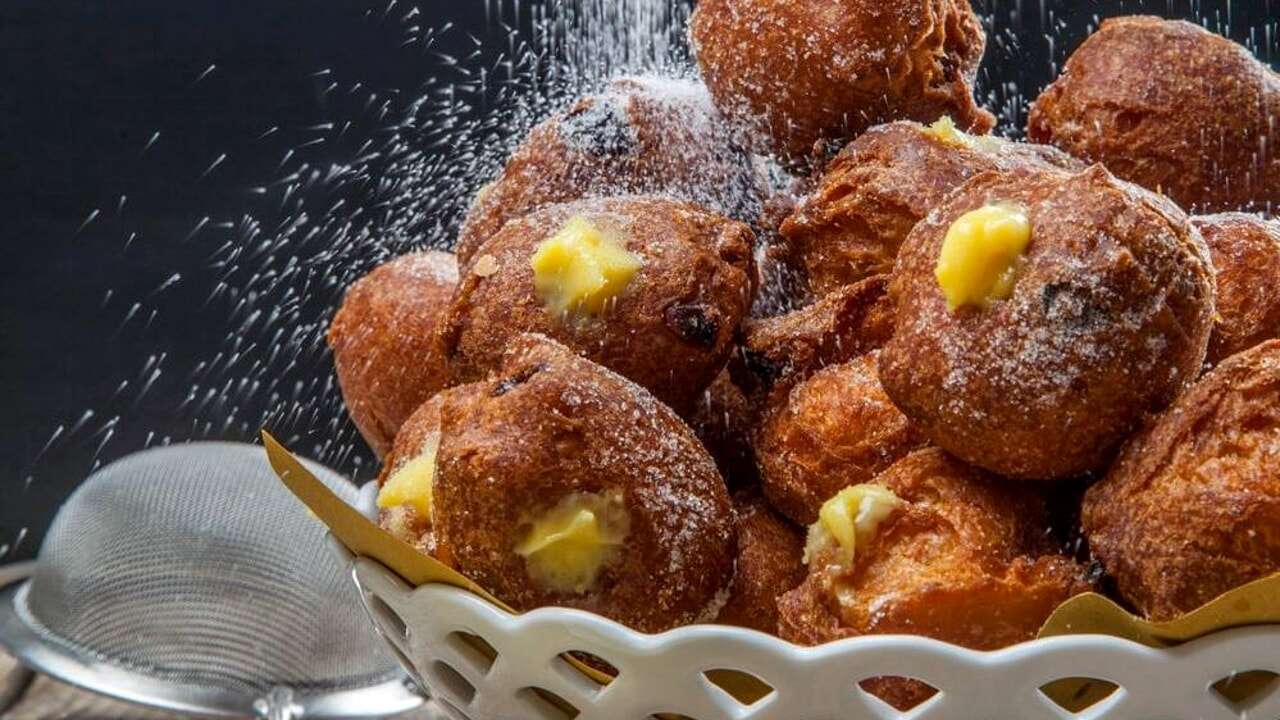
Tuscan Rice Fritters: The Festive Recipe Tradition
In Tuscany, some traditions don’t just belong to a season they announce it. One of the most beloved examples is frittelle di riso, soft rice fritters fried to golden perfection and rolled in sugar while still warm. You’ll find them in pastry shops and family kitchens across the region, especially between Carnival and St. Joseph’s Day (March 19), when they’re also known as “St. Joseph’s rice fritters”.
But there’s a place where the tradition becomes a full community ritual: San Donato in Collina, near Florence, often referred to as the “Paese delle frittelle” (the Village of Fritters). Here, the annual celebration turns a simple sweet into a destination-worthy food experience, with weekend production that draws locals and visitors who come for one thing: that unmistakable aroma of rice, citrus zest, and hot oil in the winter air.
This article takes you through the story behind Tuscan rice fritters, explains why San Donato became synonymous with them, and gives you a classic, reliable recipe.
A dessert tied to the calendar: Carnival, St. Joseph, and Tuscany’s “sweet season”
In Tuscany, fried sweets are not casual: they’re calendar food. Rice fritters appear prominently during Carnival, but they’re also strongly linked to March 19, the Feast of San Giuseppe (St. Joseph), which in Italy is also Father’s Day. That’s why many sources explicitly refer to them as frittelle di riso di San Giuseppe.
This dual identity makes them especially popular: Carnival brings the festive momentum, and St. Joseph’s Day gives the tradition a “finale” that feels like a last indulgence before spring really begins.
Historically, the recipe’s deep roots in Central Italy are widely noted, and Tuscan tradition is often described as ancient so much so that older culinary texts are cited as evidence that the technique (rice cooked in milk, then fried) has been around for centuries.
Why San Donato in Collina is the “Village of Fritters”
Some towns become famous for a single product because they grow it San Donato is famous because it makes it together.
Local event listings and cultural guides consistently describe San Donato in Collina as the “Paese delle frittelle”, highlighting a long-running festival format where fritters are produced continuously in a community setting, typically on weekends across the winter-to-early-spring period
For 2026, local event coverage indicates a season starting in mid-January and continuing through March (with weekend dates and a conclusion around St. Joseph’s Day). As with all festivals, dates can shift slightly year to year, but the structure remains the same: a recurring weekend ritual that turns a pastry into an experience.
A detail that matters to travelers (and to anyone building a food itinerary): these fritters are often served in the most Tuscan way possible—with Vin Santo, the region’s famous dessert wine.
What makes Tuscan rice fritters special?
Unlike many Carnival fritters that rely primarily on flour, Tuscan frittelle di riso start with rice cooked slowly in milk. That base gives them a uniquely tender interior, almost spoon-soft, while frying creates a thin, fragrant crust.
The flavor profile is classic Tuscany:
- citrus zest (lemon and orange)
- optional raisin or candied peel
- a warm note from a splash of Vin Santo, rum, or another aromatic spirit (optional, but traditional in many versions)
They’re simple, but they’re not basic. Like many iconic regional sweets, they depend on technique: texture, temperature, and timing.
Authentic Tuscan Rice Fritters Recipe (Frittelle di Riso)
This version follows a widely shared Tuscan structure: cook rice in milk with citrus, cool it well, then enrich with eggs, flour, and leavening before frying in spoonfuls. Ingredient proportions vary by family and by town.
Ingredients (makes about 25–30 fritters)
For the rice base
- 150–200 g risotto rice (Arborio works well)
- 500 ml whole milk
- 20–50 g sugar (depending on how sweet you like it)
- Zest of 1 orange
- Zest of 1 lemon
- A pinch of salt
For the batter
- 2 medium eggs
- 80–100 g all-purpose flour
- 8 g baking powder (or a small packet of Italian “lievito per dolci”)
- 30 g softened butter (optional, but traditional in many versions)
- Optional: 1–2 tablespoons Vin Santo or rum
- Optional: raisins (pre-soaked and well-drained)
To fry & finish
- Peanut oil (or another high smoke-point oil)
- Granulated sugar (or powdered sugar)
Step-by-step method
- Cook the rice slowly in milk.
Combine milk, sugar, salt, and citrus zest. Add rice and cook gently until the rice is very soft and the milk is mostly absorbed. You want a thick, creamy base—not a dry risotto. - Cool completely (this is crucial).
Spread the rice mixture on a tray and let it cool. A warm base makes the batter loose and harder to fry cleanly. - Build the batter.
Mix in eggs, butter (if using), then flour and baking powder. Add Vin Santo/rum and raisins if you want the most traditional “festival” aroma. The batter should be thick and spoonable, not runny. - Rest the batter (optional but recommended).
Let it sit 30–60 minutes. Some traditional approaches rest longer; even a short rest improves cohesion and texture. - Fry by the spoonful.
Heat oil to about 170–175°C / 338–347°F. Drop spoonfuls of batter in, fry a few at a time, and turn until evenly golden. - Drain, then sugar.
Drain on paper, then roll in granulated sugar while warm (the classic way), or dust with powdered sugar once cooled.
Pro tips for lighter, better fritters
- Oil temperature is everything. Too cool = greasy; too hot = brown outside, undercooked inside.
- Cool the rice base fully. This single step improves structure more than any “secret ingredient.”
- Don’t overmix once flour is added. You want tenderness, not chew.
- Pair like a local: warm fritters + a small glass of Vin Santo is a very Tuscan end-of-winter treat.
A small sweet that becomes a place
Frittelle di riso are the kind of tradition Tuscany does best: humble ingredients, strong identity, and a communal rhythm that repeats every year until it becomes culture. In San Donato in Collina, that culture is so visible it turns into a nickname, the Village of Fritters, and into a reason to travel, taste, and join a local ritual that feels timeless.