


“Trick or Treat?” Tuscan & Florentine Sweets for All Souls’ Day
In Tuscany, the early days of November aren’t just about spooky costumes. They’re about memory, ritual, and seasonal sweets that bridge the sacred and the everyday.
On All Saints’ Day (November 1) and All Souls’ Day (November 2), bakeries from Siena to the Maremma bring out once-a-year specialties walnut-and-raisin breads scented with black pepper, almond biscuits shaped like bones, and chestnut-flour cakes perfumed with rosemary. Below you’ll find a practical guide to the traditional Tuscan and Florentine sweets for the Feast of the Dead, with quick notes on origins, what they taste like, and where to find or recreate them at home.
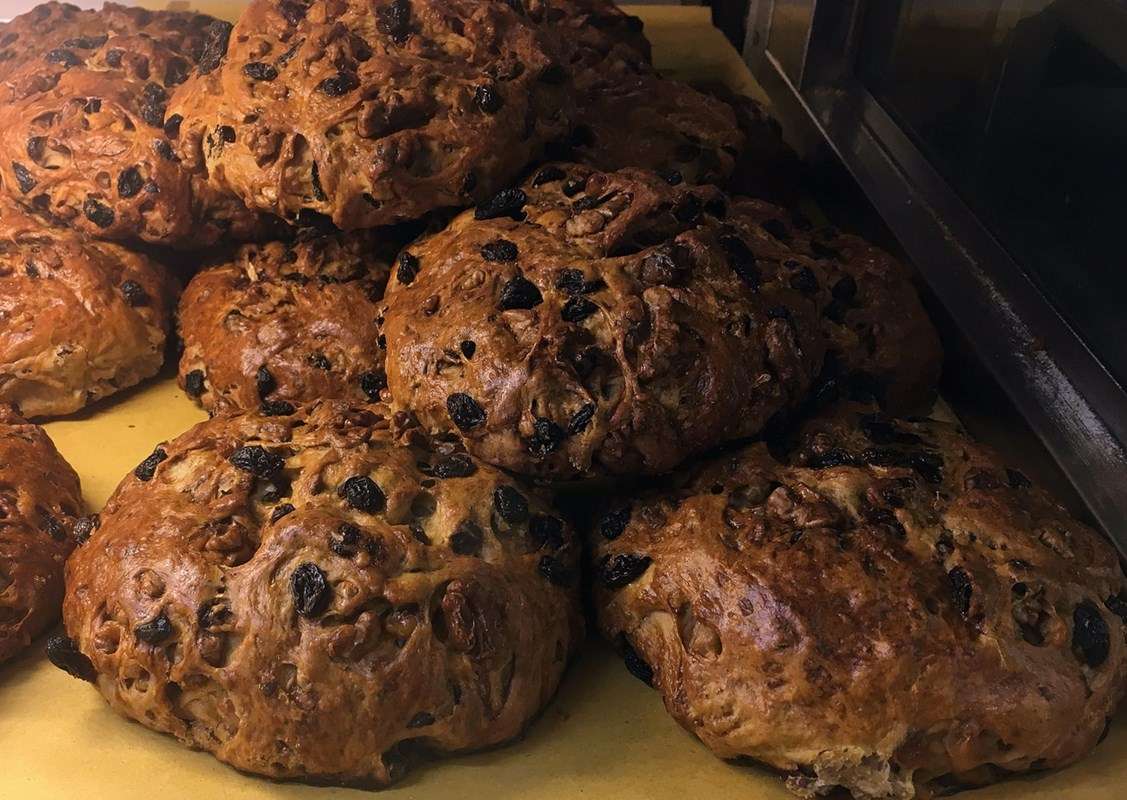
Pan co’ Santi (Pane coi Santi): Siena’s signature bread for I Santi & I Morti
If there’s one icon of Tuscan All Saints’ baking, it’s Pan co’ Santi literally “bread with the saints,” a leavened loaf studded with raisins and walnuts, often enlivened by black pepper and sometimes red wine. Born in Siena and spread through the surrounding territory (Crete Senesi, Val d’Orcia), it’s a fall-only bakery item, made specifically for All Saints’/All Souls’ and the weeks around them unlike many pastries that have slipped into year-round production.
Expect a moderately sweet crumb, chewy raisins, the gentle bitterness of walnut, and a faint spicy warmth from pepper. Some versions add honey or anise; others glaze the crust. The bread is recognized as a traditional Tuscan product (PAT) and has long been associated with the early November feasts. Pair slices with Vin Santo or a simple caffè.
Where to try/learn more: Local tourism boards in Siena and Tuscany publish recipes and context every fall, with variations on spice, leavening time, and shaping useful if you’d like to bake at home.
Ciaccino / Schiaccia dei Santi (Maremma, Grosseto area)
Closely related in spirit to Pan co’ Santi is the ciaccino also called schiaccia dei santi baked especially in Civitella Marittima and parts of the Maremma. Think of a flattened, rustic loaf made from bread dough with raisins, walnuts, salt, and pepper; it can lean sweet or savory depending on the village tradition. It’s eaten at breakfast or merenda and sometimes served with moscadello or passito.
If you love the flavor profile of Pan co’ Santi but prefer something less sweet and more “country-style,” the ciaccino is your target. Many home recipes fold in a little anise or a drizzle of olive oil for fragrance.
Fave dei Morti: almond “fava beans” of remembrance
Across Central Italy, and present in Tuscany, you’ll find Fave dei Morti, small almond cookies named after the ancient ritual of offering fava beans to the dead. Soft or gently crisp depending on the baker, they’re perfumed with citrus zest or almond liqueur and appear from mid-October through the first days of November. They’re a subtle, tea-time counterpoint to richer breads.
Ossa di Morto: “bones of the dead” from Volterra and beyond
Ossa di Morto (Bones of the Dead) are another seasonal staple, especially known around Volterra. These hazelnut- or almond-based biscuits are dry, light, and shaped to resemble bones; they’re typically baked for November 2 (All Souls’ Day). The texture makes them perfect dunkers for Vin Santo or sweet wine, and the recipe relies on egg whites, sugar, nuts, and flour with spice variations by town.
Castagnaccio: the chestnut-flour cake of Tuscan autumn
While not exclusive to All Souls’ Day, castagnaccio, a minimalist chestnut-flour cake with olive oil, raisins, pine nuts, and rosemary, is a quintessential Tuscan fall dessert often listed among seasonal All Saints’ sweets in national roundups. The flavor is earthy-sweet (chestnut flour has no added sugar), the crumb is dense, and the aroma is unmistakably rustic. If your All Souls’ table features new olive oil, a slice of castagnaccio is the ideal partner.
How to bring these traditions home
1) Bake Pan co’ Santi the Tuscan way.
Start with bread dough, then knead in lots of walnuts and raisins (the “santi”), freshly ground black pepper, a spoon of honey, and extra-virgin olive oil. Many Sienese bakers insist on a long leavening and bake low and slow for a soft, fragrant crumb. Serve slightly warm. Official tourism and food portals in Tuscany publish reliable base recipes each fall if you need a tested template.
2) Try a Maremma-style ciaccino (schiaccia dei santi).
Use bread dough, but flatten it into a rustic oval; fold in raisins, walnuts, pepper, and optionally anise. Bake until browned and lightly crackled; enjoy at breakfast with coffee or at merenda with a glass of passito.
3) Keep Fave dei Morti simple.
Pulse blanched almonds with sugar, bind with eggs and aroma, shape into small “beans,” and bake just to set. Their simplicity is the point and an echo of their ritual origin.
4) Choose your Ossa di Morto texture.
Volterra-style versions often feature toasted hazelnuts and a dry, snappy bite; other towns lean almond and spice. Either way, go easy on moisture and let them firm up in a low oven.
5) Castagnaccio needs great ingredients, not sugar.
Use fresh chestnut flour, good olive oil, and real rosemary needles. Hydrate raisins, scatter pine nuts, and bake just until the surface cracks. Serve with ricotta or honey if you want richness without undermining tradition.
Where to taste them in Tuscany
- Siena & province: Pan co’ Santi appears in bakeries from late October through mid-November; local guides and tourism portals feature recipes and backstories every year.
- Maremma (Civitella Marittima): Look for ciaccino/schiaccia dei santi in village bakeries; some versions are surprisingly savory.
- Volterra: Ask for Ossa di Morto during the All Souls’ period; many shops highlight local nut variations.
Glossary
- Pan co’ Santi / Pane coi Santi — Sienese raisin-and-walnut bread for All Saints’/All Souls’, sometimes peppered; PAT-listed traditional product.
- Ciaccino / Schiaccia dei Santi — Maremma flat loaf with raisins, walnuts, salt, pepper; sweet or savory variants.
- Fave dei Morti — Almond “bean” cookies tied to All Souls’ offerings across Central Italy (including Tuscany).
- Ossa di Morto — “Bones of the Dead” biscuits, notably from Volterra; nut-based, crisp, and perfect for dunking.
- Castagnaccio — Chestnut-flour cake (autumn staple) often included in All Saints’ seasonal sweet lists.