


Olive Harvest in Tuscany: History, Methods, and Where to Dine Inside an Olive Grove
Olive oil in Tuscany isn’t just a condiment; it’s a calendar, a craft, and a culture. Each autumn, from the first chill of October through November, families and frantoi (mills) race daylight to turn fresh-picked olives into the emerald, peppery olio nuovo that defines the season.
This guide distills the history, method, and rules of the olive harvest plus a curated list of places where you can eat inside an olive grove in Tuscany.
A short history in logos and laws: Toscano IGP & the Tuscan PDOs
Tuscany protects its oil heritage through both IGP “Toscano” (a region-wide indication) and several PDOs (DOP) tied to specific areas and styles: Chianti Classico DOP, Lucca DOP, Seggiano DOP, and Terre di Siena DOP. These names aren’t marketing fluff; they refer to rulebooks that define varieties, territories, and quality parameters. The Toscano IGP disciplinare lists classic cultivars such as Frantoio, Leccino, Moraiolo and Pendolino (with other local varieties allowed within limits), while PDOs narrow things further, Seggiano DOP, for example, must be based largely on the local Olivastra Seggianese and sets stringent chemistry targets.
On the broader EU level, the categories extra virgin, virgin, lampante are defined by regulation (including sensory “panel test” and chemical limits). For labeling, the term “cold extraction” can appear only if the oil is obtained below 27 °C by centrifugation or percolation. These details matter to buyers and to mills that want to communicate quality correctly.
When the harvest happens
Olive harvest in Tuscany typically runs mid-October to late November, sometimes slipping into early December at elevation or in cooler pockets. Producers adjust dates by altitude, exposure, cultivar, and year aiming for peak aromatics and a solid polyphenol profile. Many estates advise completing harvest by late November for quality, though coastal or warmer sites may start earlier in October. In practice, the window is October–November, with local nuance.
A key timing cue is invaiatura the color change as olives ripen from green to purple-black. Many growers target a partial invaiatura for a balance of fragrance, freshness, and phenolics; picking very early increases bitterness and pungency (those healthy, peppery notes), while picking late increases yield but can blunt the profile.
How olives are harvested: from hands to shakers
Methods range from traditional brucatura (hand-stripping) and pettini (small rakes) with nets under the trees, to agevolatori (electric combs) and tree shakers in suitable orchards. Steeper hills and ancient groves still favor manual work; newer or flatter orchards may adopt careful mechanization to beat autumn weather. After picking, olives are defoliated and cleaned, then rushed to the mill. Quality-minded farms aim to mill within ~24 hours to avoid defects tied to delays.
Inside the mill: from fruit to “green gold”
At the frantoio, olives are washed and crushed; the paste rests in malaxation before oil is separated by centrifuge. The craft lives in managing time and temperature. EU labeling rules reserve “cold extraction” for processes below 27 °C; academically, there’s an ongoing quality–yield trade-off as malaxation time/temperature rise. Studies show different settings can tilt phenolics, aroma, and yield, with many artisan mills preferring moderate temperatures and tighter times to keep flavors bright and shelf-life solid.
Finally, qualified tasting panels (per EU rules) ensure an extra virgin shows no sensory defects and meets chemical standards (e.g., free acidity ≤ 0.8 g/100 g). Several Tuscan PDOs go stricter; Seggiano DOP and Terre di Siena DOP, for instance, specify lower maximum acidity and other chemistry thresholds in their disciplinari.
Practical “rules” & etiquette for visitors during harvest
- Book with flexibility. Weather moves schedules; plan ranges, not fixed hours.
- Wear boots and layers. Nets are dewy; evenings get cool.
- Don’t pick unless invited. Traceability and safety matter during active harvest.
- Ask about milling cadence. Many farms will proudly tell you they mill the same day a useful marker of freshness.
Where to eat inside an olive grove in Tuscany
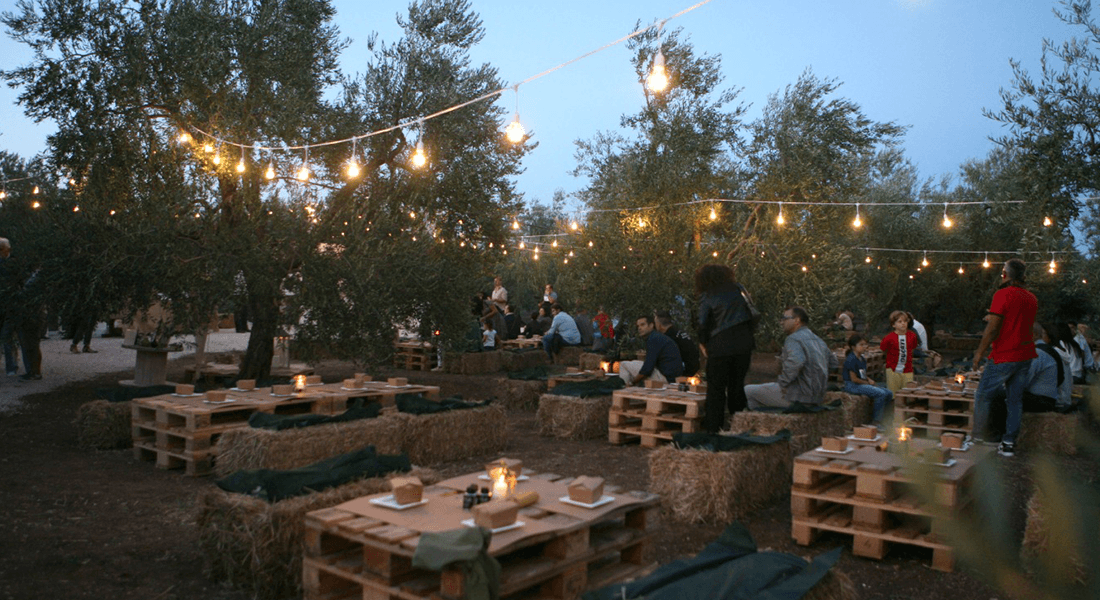
Olive-grove dining sits under Italy’s new oleoturismo rules (2022), which set quality standards for educational tastings, farm meals, and EVOO experiences. That’s why you’re seeing more picnics, long-table lunches, and guided tastings among the trees. Here are credible, bookable ideas across the region:
- Picnic in a hillside olive grove (Montepulciano area). Ready-made baskets, wines, and shaded spots among the olive trees with lunch or dinner time slots.
- “Lunch among the Olive Trees” (Montepulciano/Montepulciano–Siena). A sit-down meal in the grove, bruschetta with new oil, salumi, a pasta course, cantucci, run by a local family.
- EVOO Picnic near Florence (Bagno a Ripoli). Olive-oil tasting + picnic in the fields; guided introduction to EVOO styles and how to taste them.
- Ristorante L’Oliveto (Montepulciano). A romantic dinner setting inside an olive grove (seasonal; check conditions).
- Walk among the olive trees + tasting (Val d’Orcia/Crete). Guided olive-grove walk followed by an oil tasting—some farms add light food pairings.
- From olives to oil: tasting with lunch or dinner (Pisa hills). A structured farm meal with EVOO tasting that follows the production story from grove to table.
- Turismo dell’Olio (regional listings). A Toscana-wide portal with olive-centric experiences, from picnics under century-old trees to restaurants that spotlight oil pairings.
Planning tip: late-October to late-November is prime for olio nuovo menus; some venues move tables from the grove to a terrace if the weather turns.
Tasting like a local
- Try “olio nuovo” plain on toast (bruschetta). You’re looking for fresh-cut grass, artichoke, almond, then the classic Tuscan bitter spicy finish.
- Read labels. Toscano IGP guarantees Tuscan origin and methods; PDO names (Chianti Classico, Lucca, Seggiano, Terre di Siena) narrow place and profile.
- Check the harvest year and packaging. Dark glass, quick milling, and a recent harvest date signal care.
- Don’t fear bitterness. In Tuscany, peppery “bite” is a feature tied to polyphenols, not a flaw.
A one-day “olive harvest” itinerary
Morning — Olive-grove tour and EVOO tasting near Florence; short walk among the trees to learn varieties (Frantoio, Leccino, Moraiolo, Pendolino) and harvest methods.
Midday — Picnic in the olive fields or lunch among the trees near Montepulciano/Siena; pair bruschetta and seasonal soups with new oil. Afternoon — Drop by a frantoio to see (or at least hear explained) crushing, malaxation, and cold extraction; pick up bottles labeled Toscano IGP or a local PDO.
Golden hour — Photos among silvery leaves, then back to town for dinner.