


The Tuscan Tradition of “Olio nuovo”: the Best Recipes to Make with the Season’s First Oil
Each autumn, Tuscany turns a luminous shade of green. Farmers spread nets beneath silver-leafed trees, olives are whisked to the frantoio (mill) within hours, and bottles of olio nuovo, the first, just-pressed Tuscan extra-virgin olive oil, arrive on kitchen tables. Peppery and vibrant, this early-harvest, cold-extracted oil is less a pantry item than a short, delicious season.
Below you’ll find what makes olio nuovo special, how to buy and store it, and a curated set of recipes with new oil, from bruschetta to soups, beans, vegetables, meat, seafood, and even dessert, so you can taste Tuscany at its freshest.
What “olio nuovo” really means
Olio nuovo is the first oil of the harvest typically pressed from mid-October through November in Tuscany using early-ripened olives (often Frantoio, Leccino, Moraiolo, Pendolino). Early harvest yields higher aroma and polyphenols (bitterness and a peppery tickle in the throat), a saturated green color, and a distinctive scent of cut grass, artichoke, tomato leaf, almond. Because it’s unfiltered or only lightly filtered, it can look cloudy at first; that turbidity is normal and part of the charm.
How to buy: Choose dark glass bottles, check the harvest year (not just a generic “best before”), and prefer producers who mill within 24 hours of picking. The labels Toscano IGP or area PDOs (e.g., Chianti Classico DOP, Lucca DOP, Seggiano DOP, Terre di Siena DOP) indicate traceable origin and rules.
How to store: Keep it cool and dark, cap tightly, and use it quickly for peak vibrancy, enjoy within 3–4 months of pressing.
How to cook with it: Treat olio nuovo like you would a premium wine: enjoy it raw or as a finishing oil. Heat mutes its perfume; use gentle cooking only when necessary and finish dishes with a generous green thread right before serving.
The Essential Taste Test
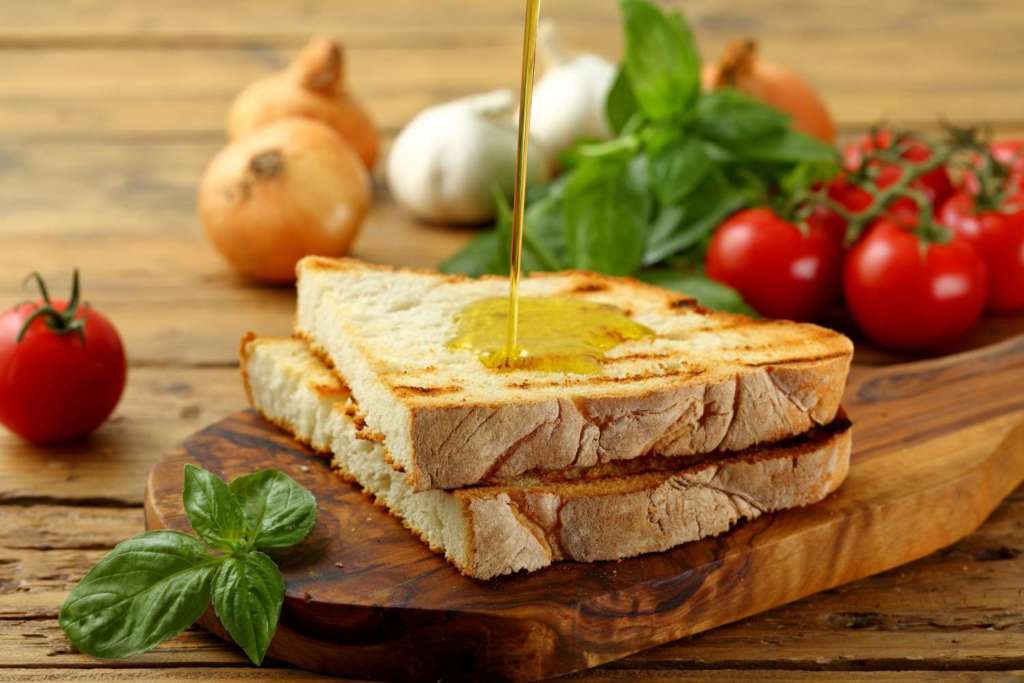
Toast rustic bread, rub with a cut garlic clove if you like, flood with new oil, add a sprinkle of sea salt (and a pinch of black pepper or chili). That’s your baseline: bruschetta all’olio the simplest, most revealing way to calibrate your palate before cooking.
Recipes & Ideas: Everything Tastes Better with New Oil
1) Antipasti & Aperitivo
Bruschetta all’Olio
- Grill or toast slices of Tuscan unsalted bread (pane sciapo) until crisp.
- Rub lightly with garlic, season with flake salt, and pour olio nuovo generously.
- Add seasonal toppings (see below), but always taste at least one slice solo olio.
Pinzimonio (Crudités with New Oil Dip)
- Pour olio nuovo into small bowls; season with little more than salt and a drop of lemon if you like.
- Serve with fennel wedges, celery hearts, carrots, radishes, baby peppers. The oil’s peppery bite turns raw vegetables into an aperitivo.
Whipped Ricotta with Olio Nuovo & Lemon
- Whisk 250 g fresh ricotta with zest of 1 lemon, salt, and 2–3 tbsp olio nuovo.
- Drizzle more oil on top, finish with black pepper and thyme. Spoon onto grilled bread.
Crostini “New Oil Trio”
- Chopped tomatoes (even better, slow-roasted autumn tomatoes) + basil + new oil.
- Sautéed mushrooms finished off-heat with new oil and parsley.
- Cannellini beans mashed warm with garlic, salt, and new oil.
2) Soups & Beans Tuscan Comfort Food
Ribollita (Hearty Kale–Bean Soup), Finished with Olio Nuovo
- Make your favorite ribollita (cannellini beans, cavolo nero, bread, veg).
- Ladle into bowls and pour a green thread of olio nuovo at the table; it wakes up the kale and turns the broth silkier.
Pappa al Pomodoro (Tomato–Bread Stew)
- Simmer tomatoes, garlic, basil, and torn bread to a thick porridge.
- Finish each bowl with 2–3 tsp new oil; the flavor lift is enormous.
Fagioli all’Olio (Warm Beans with New Oil)
- Warm zolfini or cannellini beans with a bay leaf and garlic clove.
- Drain, season with salt, a squeeze of lemon, and a generous pour of new oil.
- Optional: a pinch of crushed chili or minced raw rosemary.
3) Vegetables & Salads
Roasted Potatoes with Rosemary & New Oil Finish
- Roast potatoes with just enough neutral oil to crisp.
- Toss off-tray with fresh rosemary, sea salt, and olio nuovo. The perfume is pure Tuscany.
Cavolo Nero Salad with Pecorino
- Thinly slice black kale, massage with lemon and salt to soften.
- Fold in shaved Pecorino Toscano, toasted almonds, and new oil.
- Add roasted squash cubes or pomegranate seeds for color.
Grilled Vegetables, Oil at the End
- Grill zucchini, peppers, eggplant, radicchio.
- Plate and finish with olio nuovo, chopped herbs, and a few capers.
- Tip: seasoning after the grill keeps the oil’s aroma bright.
4) Meat, Eggs & Seafood
Tagliata di Manzo (Sliced Steak) with New Oil
- Sear a Tuscan-style steak, slice, season with flaky salt.
- Finish the platter with 2–3 tbsp olio nuovo, plus arugula and lemon.
- That final drizzle turns meat juices into a natural, glossy sauce.
Uova al Tegamino (Fried Eggs) with New Oil
- Fry eggs gently in olive oil or butter.
- Off heat, spoon new oil over the yolks, add salt, pepper, and a little grated pecorino.
- Serve with crusty bread to capture every drop.
White Fish “All’Olio Nuovo”
- Pan-roast or steam hake, cod, or branzino with minimal fat.
- Plate with lemon segments, herbs, and a generous finish of new oil.
- The peppery note balances delicate fish without heavy sauces.
5) Pasta, Grains & Bakery
Spaghetti Aglio, Olio Nuovo e Peperoncino
- Keep it classic: lightly sweat garlic and chili, toss pasta, then kill the heat and add 2–3 tbsp olio nuovo for perfume. Finish with parsley and a squeeze of lemon.
Farro Salad with Autumn Vegetables
- Cook farro until al dente; mix with roasted pumpkin, red onion, herbs.
- Dress warm with new oil, vinegar or lemon, and salt—the warmth helps the grains absorb the oil’s aromas.
Schiacciata all’Olio (Tuscan Flatbread)
- Bake a simple olive-oil flatbread, but finish with a last brush of olio nuovo the instant it comes from the oven.
- Sprinkle sea salt and serve while fragrant. (You can’t bottle that smell.)
Olive-Oil Citrus Cake
- Use new oil in a no-butter cake scented with orange and lemon.
- Drizzle a teaspoon of olio nuovo over each slice before serving and add a pinch of sea salt—unexpected, and irresistible.
Gelato (or Yogurt) with Olio Nuovo & Sea Salt
- The Tuscan trick: pour new oil over fior di latte gelato (or thick yogurt) and finish with flaky salt.
- Sweet, creamy, peppery, and perfectly modern.
Topping & Dressing Formulas (copy-and-use)
- Green Salsa for Meats/Fish: 1 bunch parsley, 1 anchovy, 1 tsp capers, 1 tsp lemon zest, 3–4 tbsp olio nuovo, pinch of chili, salt. Chop to a spoonable sauce.
- Autumn Vinaigrette: 3 tbsp new oil, 1 tbsp red-wine vinegar, 1 tsp mustard, 1 tsp honey, salt. Shake, dress right before serving.
- Warm Bean Dressing: 3 tbsp new oil, 1 tbsp lemon, 1 small grated garlic clove, pinch chili, salt. Toss with hot beans so they absorb the flavors.
Frequently Asked Questions
Can I cook with olio nuovo at high heat?
You can, but you’ll lose the magic. Use neutral or everyday EVOO for cooking and finish with olio nuovo.
Why is it so peppery?
That tickle is typical of early-harvest Tuscan oil and tied to polyphenols a hallmark of freshness and style.
How long does it last?
It’s delicious all year, but its vivid aromatics are most intense in the first months after pressing. Buy smaller bottles and finish them.