


Meat or Fish? What Italian Families Traditionally Eat During the Holidays
Ask ten Italian families what’s on the table at Christmas or New Year’s, and you’ll get a chorus of answers, baccalà, capitone, cotechino e lenticchie, lasagne al ragù, agnello al forno, all correct, all deeply rooted in place, faith, and season. The short version is this: fish leads on Christmas Eve, meat reigns on Christmas Day and New Year’s, and lamb centers Easter. The long version, how we got here, and why many families still follow these patterns, is a story of Catholic tradition, regional geography, historical economics, and culinary symbolism.
This guide explains the meat vs. fish question during Italian holidays, with examples and practical menus.
The Big Rule of Thumb
- Christmas Eve (La Vigilia): fish-based
In many households, especially in the South and along the coasts, Christmas Eve is a “cena di magro” (lean supper): no meat, plenty of fish and seafood. This echoes the Catholic custom of abstaining from meat before major feasts. - Christmas Day (Natale): meat-based
The pranzo di Natale is typically meat-forward, reflecting abundance after the vigil fast: roasts, ragù, filled pastas. - New Year’s (San Silvestro/Capodanno): prosperity foods
The midnight dish is almost universally lenticchie con cotechino o zampone (lentils with rich cured pork), a pairing that symbolizes coins (lentils) and wealth (fat pork) in the year ahead. - Easter (Pasqua): lamb
Agnello or capretto (lamb or kid) anchors the spring table, connecting Jewish Passover and Christian Easter symbolism with Italy’s pastoral calendar.
Why Fish on Christmas Eve?
1) Religious Tradition
Centuries of Catholic practice encouraged abstinence from meat on the eves of major feasts. While modern obligations are looser, the cultural habit endures: families still speak of “la Vigilia di magro.”
2) Regional Geography
Italy is a peninsula with long coastlines and fish-rich markets, especially in Campania, Apulia, Calabria, Sicily, Liguria, Veneto. Coastal access shaped what was practical (and celebratory) in winter.
3) Market Logistics & Preservation
Before modern refrigeration, fish appeared on winter tables thanks to preservation: baccalà (salt cod), stoccafisso (stockfish), anchovies under salt, and eel. These staples became holiday icons, Neapolitan capitone (female eel) famously marks Christmas Eve in many families.
Typical Christmas Eve menus (fish):
- Antipasti: fried zeppole, marinated anchovies, insalata di mare
- Primi: spaghetti alle vongole, linguine allo scoglio, risotto al nero di seppia
- Secondi: baccalà alla napoletana or alla vicentina, frittura mista, anguilla in umido or alla griglia
- Contorni & sweets: bitter greens, fried cauliflower, struffoli, cartellate, mostaccioli (regional)
Why Meat on Christmas Day?
1) Feast After Fast
Christmas Day expresses abundance and warmth after the lean Vigil: roasts, rich sauces, and filled pastas are the edible language of celebration.
2) Winter Pantry & Pastoral Cycles
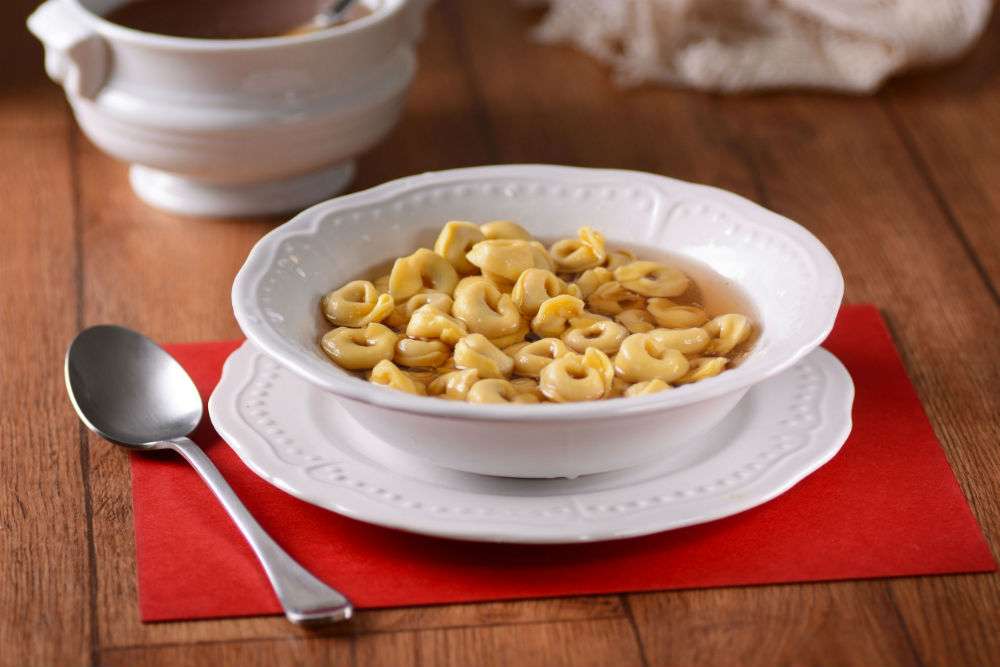
The colder months historically favored slaughtering pigs and long-simmered ragù. Families gathered around lasagne al ragù, cappelletti in brodo, tortellini, and bolliti misti dishes that make sense when it’s cold.
3) Local Pride
From Emilia-Romagna’s silk-smooth ragù to Piemonte’s brasati al Barolo and bollito con salse, from Tuscany’s peposo and arrosti to Sardinia’s porceddu, meat courses showcase regional identities.
Typical Christmas Day menus (meat):
- Antipasti: salumi, giardiniera, pâté, fritters
- Primi: tortellini/cappelletti in brodo, lasagne, agnolotti del plin
- Secondi: arrosto di vitello, capone, anatra, bollito misto, brasato
- Sides & sweets: roasted potatoes, cardoons, panettone, pandoro, torrone
New Year’s: Lentils and Cotechino
Lentils resemble coins, making them a natural emblem of prosperity; cotechino (or zampone, stuffed into a pig’s trotter) adds fat and richness, signaling abundance. Many families eat the dish right after midnight on New Year’s Eve or for lunch on January 1st. It’s one of the most consistent, cross-regional traditions in the country.
Menu frame:
- Starters: insalata russa, crostini, seafood canapés (carryover from fishy Vigilia)
- Main: cotechino e lenticchie; in some regions, a secondary roast or lasagna
- Toast: spumante/metodo classico; uva (grapes) for luck
Regional Highlights: North to South, Coast to Hills
- Northern Italy (Piemonte, Lombardia, Veneto): Rich broths, bollito, polenta e baccalà, eel on the Po delta, then roasts for Christmas Day.
- Central Italy (Tuscany, Emilia-Romagna, Marche, Umbria): Cappelletti or tortellini in brodo, lasagne, peppered beef (peposo), arista di maiale, with seafood vigils on the coast.
- Southern Italy (Campania, Puglia, Calabria, Sicily): Strong fish tradition on Christmas Eve (capitone, baccalà, fritture), then meat roasts and stuffed pastas on Christmas Day; baroque dessert tables.
- Islands: Sardinia leans to lamb/porceddu; Sicily maintains robust seafood vigils and cassata/cannoli sweets.
Why Families Still Follow These Patterns Today
- Continuity & Identity: The menu is a memory map grandparents, dialects, the market vendor who “always” holds a piece of baccalà.
- Symbolism: Fast → feast, coins → wealth, lamb → rebirth. Food turns values into rituals.
- Seasonality: Winter favors stews, broth, preserved fish, and oven roasts; the calendar supports the tradition.
- Community Convenience: Fishmongers and butchers still stock for the holidays in predictable ways, reinforcing the cycle.
Contemporary Twists
- Sustainable seafood: Families swap threatened species (e.g., wild eel) for mussels, farmed clams, small blue fish, or sustainably sourced baccalà.
- Lighter roasts: Turkey breast, capon rolled with herbs, or pork loin replace heavier cuts.
- Vegetable-forward feasts: Ribollita, caponata invernale, cardoons gratinati, and roasted pumpkins keep the table abundant while balancing meat or fish.
- Regional crossovers: A Sicilian insalata d’arance e finocchi might precede tortellini in brodo from Emilia modern families mix heritage with in-laws’ traditions.
Sample Menus You Can Recreate
1) Classic Southern-Style Christmas Eve (Fish)
- Antipasti: insalata di mare, alici marinate, fried zeppoline
- Primo: spaghetti alle vongole
- Secondo: baccalà in umido, frittura mista
- Dolci: struffoli, mostaccioli
2) Emilia–Romagna Christmas Day (Meat)
- Primo: tortellini in brodo
- Secondo: bollito misto with salsa verde, mostarda; or arrosto di vitello
- Dolci: panettone or zuppa inglese
3) New Year’s Prosperity Plate
- Main at/after midnight: cotechino e lenticchie
- Toast: metodo classico; sweet bite: pandoro with mascarpone cream
Practical Tips for Hosts in Italy
- Order early: Cotechino, capon, baccalà and fresh clams sell out fast the week before the holidays.
- Plan the “magro” vigil: Build the menu around one pasta + one main to keep frying to a minimum and the kitchen sane.
- Broth is king: For Christmas Day, a clarified, well-skimmed broth turns tortellini into a memory-maker.
- Reheat smart: Cotechino reheats gently in its pouch; lentils taste better the next day with a splash of vinegar.
- Pairing basics:
- Fish Eve → Vernaccia di San Gimignano, Falanghina, Vermentino
- Meat Day → Chianti Classico, Barbera, Aglianico
- Cotechino & lentils → Lambrusco secco or Morellino di Scansano