


Pienza Pecorino: How It’s Made and Special Recipes
If Tuscany had a “taste of place” you could slice, it would be Pecorino di Pienza: a sheep’s milk cheese that captures the aromatic pastures, the slow rhythms of rural life, and the culinary instinct of a territory that has always known how to turn simple ingredients into excellence. Set in the rolling landscapes of Val d’Orcia, Pienza is one of the best-known names in Italy for pecorino so much so that the town hosts an annual cheese celebration dedicated to it.
This guide explains how Pecorino di Pienza is traditionally produced, what makes it different across its many aging styles, and provides curated recipes from starter to dessert to elevate it at the table.
What exactly is Pecorino di Pienza?
“Pecorino” simply means sheep’s milk cheese, but Pecorino di Pienza refers to cheeses made in and around Pienza and the surrounding countryside, where sheep farming and cheesemaking are long-established. Several local narratives describe it as a regional excellence tied to Pienza, Montepulciano and nearby hamlets an identity rooted in geography and tradition more than a single standardized legal specification.
A useful benchmark is Pecorino Toscano PDO, a protected designation product that defines production rules and minimum aging times (fresh vs aged). While it’s not the same thing as “Pienza pecorino,” it helps consumers understand the broader Tuscan pecorino “grammar.”
How Pecorino di Pienza is made – the traditional process
At its core, the method follows classic pecorino cheesemaking:
- Sheep’s milk selection and heating
Fresh sheep’s milk is gently warmed enough to prepare it for coagulation while preserving aroma and structure. Many producers emphasize seasonality: milk character shifts with grazing and climate. - Coagulation with rennet
The milk is coagulated using rennet (animal or vegetable, depending on producer choices), forming a curd. - Curd cutting (the “grain size” decision)
The curd is broken into pieces: smaller curds generally lead to a firmer, more age-worthy cheese, while larger pieces keep a softer, more elastic texture. - Molding and pressing
The curd is transferred into molds and pressed to expel whey and create the wheel’s shape. - Salting
Salting can be done in brine or dry, and it strongly affects flavor development and rind formation. - Aging (where Pienza pecorino becomes “many cheeses”)
Aging can range from a few weeks to many months and this is where Pecorino di Pienza expresses its most interesting variations.
Signature aging styles you’ll encounter around Pienza
- Fresh / giovane (young): mild, milky, gentle sweetness ideal for salads and light pairings.
- Semi-aged: firmer, more aromatic, great for grating or warm dishes.
- Stagionato (aged): intense, nutty, sometimes slightly spicy; the wheel becomes more crumbly and complex.
- Cave-aged (in grotta): aging in caves is a traditional central-Italy technique that leverages stable humidity and temperature to shape rind, aroma, and savory depth.
- “Fossa” style (pit-aged): some producers use infossatura, sealing wheels in special pits to create a distinct, earthy, deeply aromatic profile.
Tip for travelers and buyers: ask how it was aged (cellar, cave, pit) and how long. Those two answers tell you almost everything about what it will taste like.
The cultural heart: the cheese festival in Pienza
To understand why this cheese is so iconic locally, the best moment is the Fiera del Cacio, Pienza’s annual celebration dedicated to its pecorino and local gastronomy, traditionally held around the first Sunday of September. Fiera del Cacio
Local calendars also publish week-long programming windows (dates can vary slightly year to year, so always confirm close to travel time).
For tasting stops beyond the festival, local guides frequently recommend buying directly from producers and specialized shops in the historic center; one example often cited is Podere Il Casale for farm-focused experiences and tastings.
Pecorino di Pienza at the table: special recipes from appetizer to dessert
Below are high-impact, guest-friendly recipes that let the cheese shine at different ages. Use young pecorino where you want creaminess; use aged/cave-aged where you want intensity.
1) Appetizer: Tuscan crostini with Pecorino di Pienza, honey & walnuts
Best cheese: semi-aged or aged
Toast country bread, rub lightly with garlic (optional), add thin pecorino slices, then finish with chestnut honey (or acacia), crushed walnuts, and black pepper.
Why it works: sweet + fat + crunch amplifies aroma and creates an instantly “Tuscan” profile.
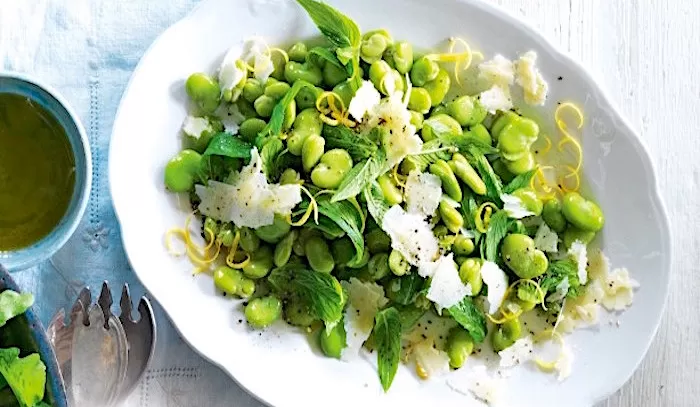
2) Appetizer/side: Fava bean & pecorino salad (the classic Tuscan pairing)
Best cheese: young to semi-aged
Combine raw (or lightly blanched) fava beans with shaved pecorino, extra virgin olive oil, lemon zest, and mint.
This pairing is widely recognized in Tuscan pecorino culture.
3) First course: Pici “cacio & pepe” with Pecorino di Pienza
Best cheese: aged (grating)
Cook pici (or thick spaghetti). In a bowl, emulsify grated pecorino with a bit of hot pasta water until creamy; add aggressively toasted black pepper; toss with pasta.
Key technique: keep heat moderate to avoid clumping think “silky sauce,” not melted cheese.
4) First course: Saffron risotto with Pecorino di Pienza and lemon zest
Best cheese: semi-aged
Finish a saffron risotto with butter (or olive oil) and pecorino instead of Parmigiano. Add lemon zest at the end.
Result: aromatic, elegant, and very “Val d’Orcia” in spirit.
5) Main course: Pork tenderloin with pecorino-herb crust
Best cheese: aged
Mix grated pecorino with chopped rosemary/thyme, breadcrumbs, and olive oil. Press onto seared pork tenderloin and finish in the oven.
Why it works: pecorino’s salt and umami create a crust that tastes far more complex than the ingredient list suggests.
6) Main course (vegetarian): Baked aubergine “boats” with tomatoes and pecorino
Best cheese: semi-aged
Roast halved aubergines, top with crushed tomatoes, oregano, garlic, then pecorino shavings. Broil briefly.
This is a simple way to bring pecorino into a Mediterranean, vegetable-forward plate.
7) Dessert: Pears baked with Vin Santo, pecorino cream, and toasted almonds
Best cheese: aged but not overly sharp
Bake pear halves with a splash of Vin Santo and orange peel. For the cream: whip ricotta with a small amount of finely grated pecorino and honey (yes—pecorino), then spoon over warm pears. Finish with toasted almonds.
Why it works: it echoes the Italian tradition of cheese + fruit + sweet wine, but feels modern and plated.
8) Dessert (easy, no-bake): Pecorino “cheesecake” cups with honey and rosemary
Best cheese: semi-aged (micro-grated)
Make a base with crushed biscuits + butter. Mix cream cheese or mascarpone with honey and a touch of micro-grated pecorino for savory depth. Top with a rosemary-honey drizzle.
The pecorino doesn’t shout it adds complexity.
Buying & serving tips
- Young pecorino: 10–15 minutes out of the fridge before serving.
- Aged/cave-aged: bring to room temp longer; serve in thinner slices or shavings.
- Pairings that rarely fail: pears, figs, walnuts, chestnut honey, Vin Santo, structured reds (Montepulciano area), and high-quality olive oil.