


6 Traditional Tuscan Recipes Made Gluten-Free at Home
Why Tuscan cooking adapts so naturally to gluten-free home cooking
One of the best things about traditional Tuscan food is that so much of it already comes from a peasant, ingredient-led kitchen built on beans, greens, chestnut flour, olive oil, tomatoes, onions and slow cooking. Many of Tuscany’s most beloved dishes were never designed to be elaborate; they were designed to be satisfying, seasonal and economical.
That makes Tuscan cuisine surprisingly well suited to gluten-free cooking at home, provided you choose certified gluten-free substitutes where needed and pay close attention to cross-contamination. In Italy, the gluten-free diet remains the standard treatment for celiac disease, and naturally gluten-free ingredients such as legumes, vegetables, meat, eggs and chestnut flour are central to many regional recipes. Cross-contamination precautions at home also matter: clean surfaces, clean utensils, fresh cooking water and separate frying oil are basic but essential rules.
The key point is this: making Tuscan food gluten-free does not mean stripping it of its identity. In many cases, it means going back to the dish’s rustic roots. A number of Tuscan classics are already naturally gluten-free, while others require only one smart substitution, usually bread or flour. From the Tuscan coast to Garfagnana and the inland countryside, there are several traditional recipes that translate beautifully into a gluten-free kitchen without losing their soul.
1 – Cecina, the naturally gluten-free Tuscan street-food classic
If you want to start with the easiest success, make cecina. This thin chickpea flatbread is one of the great simple foods of the Tuscan coast and appears under different names depending on where you are: cecina around Pisa and Versilia, torta di ceci in Livorno, and calda calda in Carrara. Its ingredient list is almost disarmingly short: chickpea flour, water, salt, extra-virgin olive oil and black pepper. It is naturally gluten-free and, when baked well, comes out crisp on the edges and creamy in the center.
At home, the secret is patience more than technique. Let the batter rest, skim the surface, use plenty of olive oil and bake it hot enough to create that golden top. Cecina works as an appetizer, a light lunch or part of a gluten-free aperitivo spread. It is also one of the clearest examples of how Tuscan cooking can be gluten-free without any adaptation at all.
2 – Castagnaccio, the chestnut cake that already belongs in a gluten-free kitchen
Another Tuscan classic that needs no reinvention is castagnaccio, the dense chestnut-flour cake associated with autumn and mountain areas such as Lunigiana and Garfagnana. Traditionally it was made with little more than chestnut flour, water and olive oil, then enriched over time with raisins, rosemary, walnuts or pine nuts depending on the family and the area. It is specifically described as naturally gluten-free and lactose-free, and because chestnut flour is naturally sweet, it often contains no refined sugar at all.
This is one of the most elegant examples of old Tuscan cooking solving a modern dietary need almost by accident. To make it at home, use certified gluten-free chestnut flour, whisk it with water and olive oil into a smooth batter, then finish it with pine nuts, raisins and rosemary. The result should be flat, dark, slightly moist and deeply aromatic. It is a dessert, but in the Tuscan sense of dessert: not too sweet, very grounded, and perfect with a coffee or after a simple supper.
3 – Ribollita, the soup that becomes gluten-free with one thoughtful swap
No article on Tuscan food is complete without ribollita. This iconic soup is built around cannellini beans, cavolo nero, Savoy cabbage, stale Tuscan bread and a small amount of tomato. It is one of the signature dishes of cold-weather Tuscany and one of the strongest examples of bread-based peasant cooking. In its classic form it is not gluten-free because of the bread, but it adapts beautifully if you replace the stale Tuscan loaf with a good-quality certified gluten-free country bread.
The trick is not to overcomplicate the recipe. Ribollita should still feel like ribollita: soft beans, long-cooked vegetables, black cabbage and bread layered into the soup so the whole dish thickens and settles. Using gluten-free bread does not change the logic of the dish at all. It simply allows you to preserve its structure. For the best texture, choose a robust loaf rather than soft sandwich bread, and let the soup rest before reheating. Like the name suggests, it is often even better the next day.
4 – Pappa al pomodoro, one of the easiest Tuscan dishes to make gluten-free
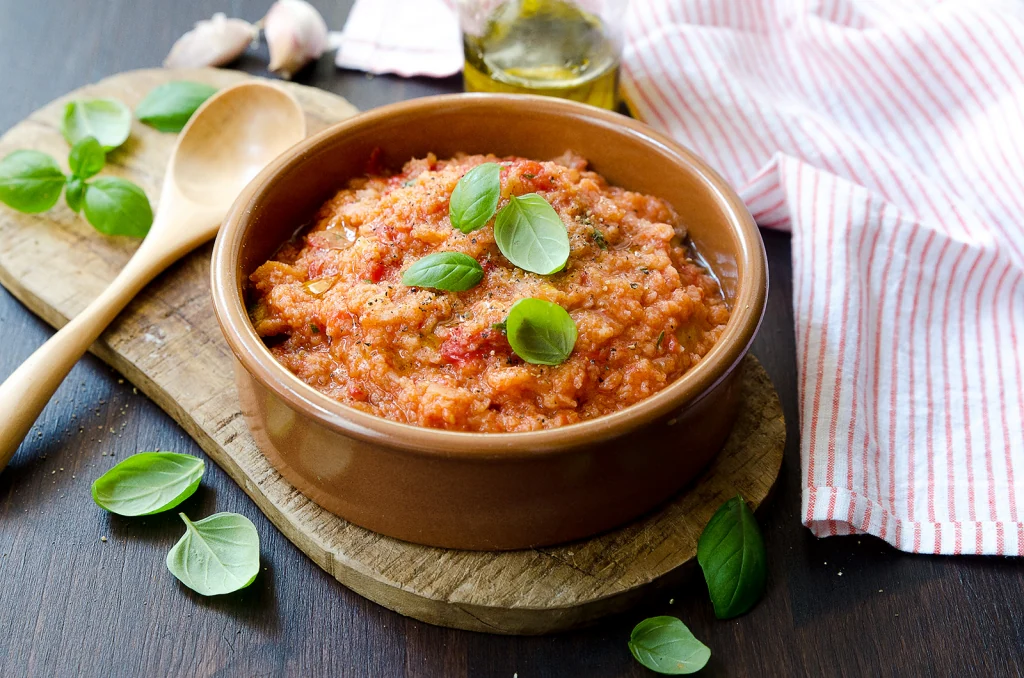
Another bread-based classic that adapts especially well is pappa al pomodoro, one of the best-known expressions of Tuscan home cooking. It was designed as a leftovers dish: stale bread, tomatoes, olive oil, salt and chili pepper, often finished with basil. The ingredients are few, the method is straightforward, and the result is far richer than it sounds.
To make it gluten-free, all you need is the right bread. Use a certified gluten-free loaf with enough body to break down into the tomatoes without turning gummy. Once the tomatoes collapse and the bread absorbs the liquid, the dish becomes thick, silky and intensely comforting. This is one of the best gluten-free Tuscan recipes to cook at home because it keeps the spirit of the original intact: humble ingredients, no waste, huge flavor.
5 – Acquacotta, a Maremma recipe that is almost already there
From Maremma comes acquacotta, a rustic soup whose most common version combines water, onions, tomatoes, olive oil, celery, carrot, toasted bread, pecorino and eggs. The defining characteristic is the long cooking, which softens the vegetables and blends everything into a broth that tastes much richer than its name suggests.
For a gluten-free version, the only essential substitution is the bread. Use certified gluten-free toasted bread, then decide whether you want to keep the pecorino and eggs or simplify the dish into a lighter vegetable version. Either way, it remains a deeply Tuscan bowl of food: practical, warming and built on pantry ingredients rather than showmanship.
6 – Peposo and arista, naturally gluten-free Tuscan mains
Tuscan food is not only soups and cakes. Some of its best-loved meat dishes are also naturally gluten-free, or very close to it. Peposo alla Fornacina, associated with Impruneta, is based on beef, red wine, garlic and black pepper cooked slowly until the meat becomes almost spreadable. It is traditionally served on toasted Tuscan bread, but for a gluten-free table that is easy to change: serve it with gluten-free toasted bread, polenta or simply alongside roasted potatoes.
Arista, the classic Tuscan roast pork loin, is another excellent option. Its core ingredients are pork loin, garlic, sage, rosemary, olive oil, white wine, salt and pepper. In other words, the recipe itself is already gluten-free as long as you avoid hidden gluten in prepared broths or sauces. These meat dishes are useful reminders that a gluten-free Tuscan menu does not have to revolve only around substitutions; sometimes it simply means choosing the right traditional recipes.
A practical rule for cooking Tuscan gluten-free food well
The best gluten-free Tuscan cooking does not try to make every recipe imitate wheat-based originals at all costs. It respects the dishes that are already naturally suited to a gluten-free diet and adapts the others only where truly necessary. Use certified chickpea flour for cecina, certified chestnut flour for castagnaccio, a strong gluten-free loaf for ribollita and pappa al pomodoro, and strict anti-contamination habits in the kitchen. That approach is both safer and more faithful to the cuisine.
In the end, traditional Tuscan recipes made gluten-free at home are not a compromise. They are often a return to the region’s most honest culinary values: simplicity, seasonality, legumes, greens, olive oil and frugality turned into pleasure. Cecina, castagnaccio, ribollita, pappa al pomodoro, acquacotta, peposo and arista prove that Tuscany and gluten-free cooking can meet very naturally on the same table.