


Traditional Tuscan Wedding Menu: Ideal and authentic dishes
A Wedding Menu That Tells the Story of Tuscany
A wedding in Tuscany is not only about the beauty of the landscape. It is also about the table. The food served during a Tuscan wedding reception should reflect the soul of the region: generous, seasonal, elegant without being artificial, and deeply connected to local traditions.
For couples dreaming of a traditional wedding in Tuscany, the menu becomes one of the most important parts of the experience. Guests may remember the ceremony, the villa, the sunset over the vineyards, or the music under the stars, but they will also remember the first bite of crostini, the handmade pasta, the scent of rosemary, the glass of Chianti Classico, the warm bread, the olive oil and the final cantucci with Vin Santo.
A traditional Tuscan wedding menu should not feel like a generic luxury banquet. It should tell a story: the story of countryside kitchens, medieval villages, family recipes, seasonal ingredients, handmade pasta, grilled meat, local wines and conviviality. Tuscany is a region where food is culture, and a wedding menu is the perfect way to celebrate that culture with elegance and authenticity.
Why Choose a Traditional Tuscan Wedding Menu?
Choosing a traditional menu for a wedding in Tuscany is ideal for couples who want their reception to feel connected to the destination. Many international couples choose Tuscany for its villas, vineyards, castles, farmhouses and historic estates, but the experience becomes much stronger when the food follows the same identity.
Tuscan cuisine is based on high-quality ingredients rather than complicated techniques. Extra virgin olive oil, unsalted Tuscan bread, seasonal vegetables, legumes, handmade pasta, local meats, pecorino cheese, cured meats and regional wines are the foundation of the table.
This simplicity is exactly what makes the cuisine so powerful. A well-designed Tuscan wedding menu does not need to be excessive. It needs balance: a beautiful aperitivo, a generous but refined antipasto, one or two memorable pasta dishes, a main course with local character, seasonal sides, a wedding cake and a final sweet moment inspired by Tuscan tradition.
The Welcome Aperitivo: The First Taste of Tuscany
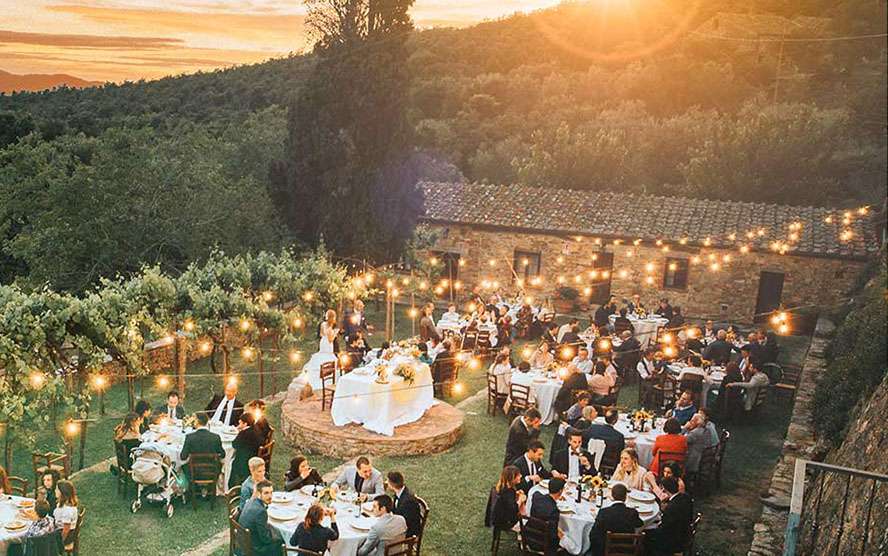
The aperitivo is one of the most atmospheric moments of a wedding in Tuscany. It often takes place outdoors: in the garden of a villa, on a panoramic terrace, in a vineyard, by a swimming pool, in a castle courtyard or under olive trees. This is the moment when guests arrive, greet each other, enjoy a glass of wine and begin to enter the rhythm of the celebration.
For a traditional Tuscan wedding, the aperitivo should include simple, recognizable and high-quality flavors. Ideal options include bruschetta with fresh tomato and basil, crostini with chicken liver pâté, pecorino cheese from the Tuscan countryside, local salumi, finocchiona, prosciutto, grilled vegetables, fried sage leaves, small bites of pappa al pomodoro, mini panzanella cups and focaccia with rosemary.
A beautiful idea is to create food stations inspired by local products: a pecorino and honey corner, a Tuscan bread and olive oil tasting, a cured meat station, or a rustic bruschetta bar. These elements make the aperitivo interactive and help guests discover authentic Tuscan flavors in a relaxed way.
Tuscan Antipasti: Rustic, Elegant and Full of Character
The antipasto is the first seated moment of the wedding meal and should immediately express the identity of the region. A classic Tuscan antipasto can include crostini neri, made with chicken liver pâté, mixed cured meats, pecorino cheese, marinated vegetables and seasonal preserves.
For a more refined wedding presentation, these traditional elements can be served in a modern way: small plated tastings, elegant wooden boards, ceramic dishes or family-style sharing platters. The goal is to preserve authenticity while adapting the service to the style of the event.
A vegetarian version can be equally rich: grilled zucchini and eggplant, artichokes in season, marinated peppers, fresh ricotta, pecorino with fig jam, panzanella, pappa al pomodoro served in small bowls, and white beans with sage and extra virgin olive oil.
This course works especially well because it introduces guests to the essence of Tuscan wedding food: bread, oil, vegetables, cheese, cured meats and intense but simple flavors.
First Courses: Handmade Pasta and Tuscan Tradition
No traditional wedding menu in Tuscany is complete without pasta. The first course is often one of the most loved moments of the reception, especially for international guests who associate Italy with handmade pasta.
One of the most suitable dishes is pici, the thick hand-rolled pasta typical of southern Tuscany. Pici can be served with aglione tomato sauce, wild boar ragù, duck ragù, Tuscan sausage sauce or a delicate pecorino cream. It is rustic but elegant, and it immediately feels connected to Siena, Val d’Orcia, Montepulciano and Montalcino.
Another excellent option is pappardelle al ragù di cinghiale, wide ribbons of pasta served with wild boar sauce. This dish has a strong countryside identity and works especially well for autumn and winter weddings.
For spring and summer weddings, lighter options may be preferable: ricotta and spinach ravioli with butter and sage, fresh tagliolini with seasonal vegetables, gnudi with tomato sauce or handmade tortelli with herbs and pecorino.
A traditional Tuscan wedding menu can include one pasta course, but many couples choose two smaller first courses to offer guests a more complete culinary experience.
Soups and Bread-Based Classics: A Tuscan Touch
Tuscan cuisine is famous for transforming simple ingredients into unforgettable dishes. Bread-based recipes such as pappa al pomodoro, ribollita and panzanella are perfect examples of this tradition.
For a wedding, these dishes should be adapted with care. Ribollita, rich with black cabbage, beans and bread, is perfect for autumn or winter celebrations, especially in countryside estates or historic villas. Pappa al pomodoro is ideal in summer, when tomatoes are at their best, and can be served as a refined starter or small tasting course. Panzanella, with bread, tomatoes, cucumber, onion and basil, is fresh and colorful, perfect for outdoor receptions in July or August.
These dishes are humble in origin but can become extremely elegant when presented thoughtfully. They also add cultural depth to the menu, showing guests that Tuscan cuisine is not only about meat and wine, but also about vegetables, bread, olive oil and rural creativity.
Main Courses: From Florentine Steak to Slow-Cooked Meats
For the main course, Tuscany offers several strong options. The most famous is certainly bistecca alla fiorentina, a thick T-bone steak traditionally grilled and served rare. It is one of the symbolic dishes of Florence and can become a spectacular choice for a wedding, especially when prepared as part of a live grill station or served family-style.
However, bistecca alla fiorentina is not always the most practical choice for every wedding, especially for large groups or formal plated dinners. Other excellent options include slow-cooked beef with Chianti wine, roasted pork loin with rosemary, guinea fowl with herbs, cinta senese pork, lamb with aromatic herbs or peposo, a traditional peppery beef stew associated with the Florence area.
For weddings in Maremma or southern Tuscany, wild boar dishes can add a strong local identity. For weddings in Chianti, meats cooked with wine, herbs and olive oil pair beautifully with the surrounding landscape.
Vegetarian main courses can include stuffed vegetables, eggplant parmigiana in a Tuscan style, baked ricotta with herbs, chickpea-based dishes, vegetable flans or seasonal mushroom preparations.
Side Dishes: Seasonal Simplicity
Tuscan side dishes should be simple and seasonal. Roasted potatoes with rosemary are a classic choice, but they can be accompanied by grilled vegetables, sautéed spinach, white beans with sage, artichokes, zucchini flowers, roasted onions, mixed salad with local olive oil or seasonal greens.
The key is not to overload the plate. Tuscan cuisine works best when each ingredient is recognizable. A traditional wedding menu should feel abundant but never heavy or confused.
In spring, asparagus, artichokes and fresh herbs are ideal. In summer, tomatoes, zucchini, eggplants and peppers bring color and freshness. In autumn, mushrooms, chestnuts, pumpkin and black cabbage create a deeper countryside atmosphere. In winter, beans, cabbage, roasted roots and hearty greens are perfect.
Tuscan Wines for a Traditional Wedding
Wine is essential to a wedding in Tuscany. The choice depends on the location and the menu, but some names immediately connect the reception to the territory.
For a wedding in Chianti, Chianti Classico is the natural protagonist. In southern Tuscany, Brunello di Montalcino, Rosso di Montalcino, Vino Nobile di Montepulciano and Morellino di Scansano are excellent choices. White wines such as Vernaccia di San Gimignano can work beautifully with aperitivo, seafood appetizers or lighter summer dishes.
A traditional Tuscan wedding can also include a wine tasting corner during the aperitivo or a guided pairing during dinner. This adds value to the guest experience and makes the menu feel even more connected to the region.
Desserts: From Wedding Cake to Cantucci and Vin Santo
The wedding cake can follow Italian tradition, with millefoglie, sponge cake with cream and berries, or a classic layered cake prepared fresh in front of guests. Millefoglie is especially popular for Tuscan weddings because it is elegant, light and theatrical when assembled live.
After the cake, a traditional sweet corner can include cantucci with Vin Santo, ricciarelli from Siena, panforte, seasonal fruit tarts, schiacciata con l’uva for autumn weddings, small pastries and artisanal gelato.
This final moment should feel joyful and convivial. A dessert buffet under the lights, paired with Vin Santo and espresso, is a perfect way to close a traditional Tuscan wedding dinner.
A Sample Traditional Tuscan Wedding Menu
A balanced traditional Tuscan wedding menu could begin with a garden aperitivo featuring bruschetta, crostini, pecorino cheese, salumi, fried sage and local olive oil. The seated dinner could continue with a Tuscan antipasto, followed by pici with aglione sauce and ravioli with butter and sage. The main course could be slow-cooked beef in Chianti wine or roasted cinta senese pork with rosemary potatoes and seasonal vegetables.
The dessert moment could include millefoglie wedding cake, cantucci with Vin Santo and a small gelato corner. Wines could include Vernaccia di San Gimignano for the aperitivo, Chianti Classico during dinner and Vin Santo for the final toast.
This type of menu feels traditional, elegant and accessible, making it suitable for both Italian and international guests.
The Perfect Menu for a Traditional Wedding in Tuscany
A traditional Tuscan wedding menu should be more than a list of dishes. It should be a journey through the region: from the countryside to the vineyard, from the farmhouse kitchen to the castle courtyard, from handmade pasta to local wine, from olive oil to the final glass of Vin Santo.
The best menus are those that respect the season, the location and the rhythm of the celebration. A summer wedding in a villa near Florence may call for panzanella, pappa al pomodoro, fresh pasta and a light dessert. An autumn wedding in Chianti may be perfect for ribollita, pappardelle with wild boar ragù, roasted meats and chestnut flavors. A wedding in Val d’Orcia or Maremma can include pici, pecorino, local wines and rustic countryside dishes.
For couples looking for traditional Tuscan wedding food, authentic wedding menus in Tuscany and Italian wedding dishes with local identity, the secret is simple: choose real ingredients, respect the territory and create a meal that feels generous, warm and memorable. In Tuscany, tradition is not old-fashioned. It is timeless.