


Cooking Class in Florence: Step-by-Step Guide
Florence is a city that invites you to experience Italy with all your senses. Beyond its Renaissance masterpieces, charming streets, and spectacular architecture, the Tuscan capital offers something equally memorable: the opportunity to discover Italian culture through its food.
Joining a cooking class in Florence is one of the most rewarding ways to explore the city’s culinary traditions. Instead of simply ordering fresh pasta at a restaurant, you can learn how to prepare it yourself, understand the importance of traditional ingredients, and discover the small techniques that make Italian cooking so special. Whether you are visiting Florence as a couple, travelling with friends, enjoying a family holiday, or exploring Tuscany on your own, a hands-on cooking experience allows you to connect with local traditions in an enjoyable and informal atmosphere. But what actually happens during an Italian cooking class? Do you need previous experience? What dishes will you prepare, and how much time should you set aside?
This step-by-step guide explains everything you can expect from a Florence cooking class, from meeting your chef to enjoying the delicious meal you have prepared.
Step 1: Arriving at Your Cooking Class and Meeting Your Italian Chef
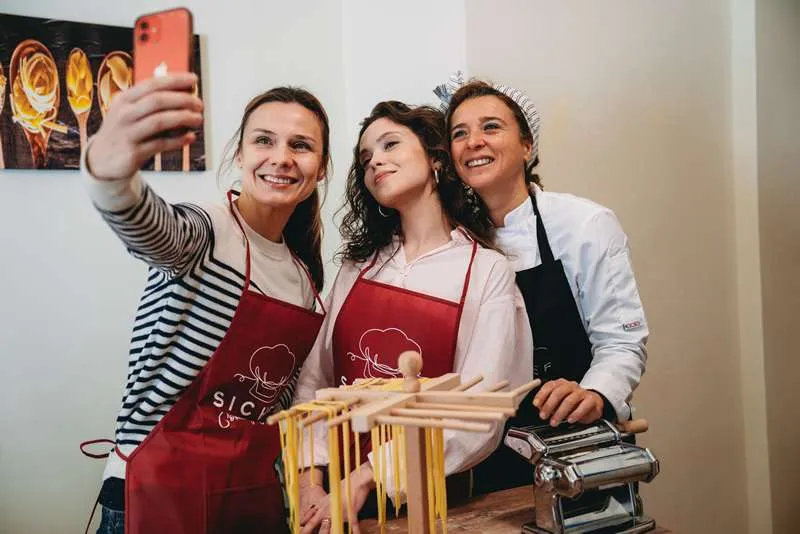
Your culinary experience usually begins with a warm welcome from a professional chef or cooking instructor. Cooking classes in Florence take place in different settings, ranging from dedicated kitchens in the historic centre to intimate cooking studios and beautiful countryside locations in the surrounding Tuscan hills.
Areas such as Sant’Ambrogio, close to Santa Croce, offer a particularly appealing setting for anyone interested in discovering Florence through its everyday food culture. Upon arrival, your chef will introduce the day’s menu, explain how the lesson is organised, and provide the equipment needed for the activities. Depending on the experience, this may include an apron, cooking utensils, ingredients, and a dedicated workstation.
One of the advantages of joining a hands-on Italian cooking class is that no previous culinary experience is generally required. Beginners can follow the instructions step by step, while participants who already enjoy cooking can improve their techniques and discover new recipes. The atmosphere is usually relaxed and interactive, with plenty of opportunities to ask questions and learn directly from the chef.
Step 2: Discovering the Ingredients Behind Authentic Tuscan Cuisine
Before preparing your first dish, you will usually be introduced to the ingredients that form the foundation of Italian and Tuscan cooking. One of the defining characteristics of traditional Tuscan cuisine is its ability to transform simple, carefully selected ingredients into dishes full of flavour. Extra virgin olive oil, seasonal vegetables, fresh herbs, tomatoes, flour, eggs, local cheeses, and aromatic ingredients all play an important role in the region’s gastronomic identity.
During this introduction, your chef may explain how to recognise quality ingredients, why seasonality matters, and how different combinations influence the final result. Some cooking experiences also include a visit to a traditional food market. Florence is home to two particularly interesting markets: Mercato di Sant’Ambrogio and Mercato Centrale, located in the San Lorenzo neighbourhood.
A market-based cooking class offers an additional opportunity to observe local shopping habits, discover regional products, and understand the relationship between fresh ingredients and Italian home cooking. Market visits are generally organised during morning sessions and depend on the programme and market opening days, so it is worth checking whether this experience is included when booking.
Step 3: Learning How to Make Fresh Pasta from Scratch
For many visitors, preparing homemade pasta is the most exciting part of a traditional cooking class in Florence. Making pasta fresca is an essential expression of Italian culinary culture, and learning the process directly from a chef is very different from simply following a recipe at home. You will usually begin by measuring the ingredients and preparing your dough. Depending on the type of pasta, this may involve combining flour and eggs or using a traditional flour-and-water mixture.
Your instructor will demonstrate how to bring the ingredients together and knead the dough until it develops the correct texture. This is where the practical experience becomes particularly valuable. You will learn how to recognise dough that is too dry or too sticky, how to work it using your hands, and why allowing it to rest helps achieve the desired consistency. The process is surprisingly satisfying, especially for anyone who has never made pasta before.
Step 4: Rolling, Cutting and Shaping Your Homemade Pasta
Once the dough has rested, the next stage is transforming it into fresh pasta. Depending on the menu, your chef might teach you how to prepare tagliatelle, pappardelle, ravioli, or other traditional pasta shapes. Some lessons also introduce regional specialities such as pici, the thick, hand-rolled pasta traditionally associated with southern Tuscany. You may work with a rolling pin, use a pasta machine, or shape individual pieces entirely by hand. Preparing filled pasta introduces another interesting technique: carefully distributing the filling, removing excess air, and sealing each piece to prevent it from opening during cooking.
This is often one of the most enjoyable moments of the lesson, as every participant begins to see the results of their work. Your first ravioli might not look exactly like those prepared by an experienced Italian chef, but learning the process is what makes the experience memorable. By the end of this stage, you will have acquired practical techniques that can easily be recreated in your own kitchen.
Step 5: Preparing Traditional Italian Sauces
Fresh pasta deserves a delicious sauce, and a good cooking class goes beyond teaching you how to make the dough. Your chef will explain how to combine ingredients, balance flavours, and choose a sauce that complements the pasta you have prepared.
Depending on the season and the lesson’s menu, you might work with fresh tomatoes, basil, butter, sage, garlic, vegetables, or traditional Tuscan cheeses. A classic butter-and-sage sauce, for example, demonstrates how a small number of ingredients can create a delicate accompaniment for filled pasta. A tomato-based sauce provides an opportunity to understand how olive oil, aromatic ingredients, and cooking time influence flavour.
You will also discover an important principle of Italian cooking: the sauce should complement the pasta rather than overwhelm it. Some lessons include techniques for combining freshly cooked pasta with its sauce, using a little cooking water to create the desired texture. These small details are often among the most useful skills you will take home.
Step 6: Preparing a Traditional Italian Dessert
Many cooking classes in Florence include a dessert-making activity, allowing participants to enjoy a complete culinary experience. One of the most popular options is tiramisù, the celebrated Italian dessert made with layers of coffee-soaked ladyfingers and a rich mascarpone cream.
During the lesson, your chef may demonstrate how to prepare the cream, assemble the different layers, balance the coffee flavour, and achieve the correct consistency. Although tiramisù is not originally a Tuscan speciality, it has become a much-loved part of Italian cooking experiences throughout the country. Another popular option is an Italian gelato class.
Depending on the programme, you may discover how gelato differs from other frozen desserts, learn about the role of its ingredients, and observe the preparation process. Dessert preparation is particularly enjoyable in a group setting, as it encourages collaboration and allows everyone to participate in creating the final course. Not every class includes both pasta and dessert, so always check the published menu before choosing your experience.
Step 7: Sitting Down Together to Enjoy Your Homemade Italian Meal
After preparing your dishes, the most anticipated part of the experience finally arrives: enjoying the food you have made. Unlike a conventional restaurant visit, a cooking class allows you to appreciate every element of the meal because you have been involved in its creation.
Depending on the format, participants may sit around a shared table or enjoy their meal in a more private setting. Fresh pasta is served with the accompanying sauces, followed by the dessert prepared during the lesson. Some experiences also include local wine, giving adult guests the opportunity to discover how Tuscan wines complement traditional Italian dishes. Non-alcoholic alternatives may also be available. The shared meal provides time to relax, exchange impressions with other participants, and continue conversations with the chef about local cuisine and Italian traditions.
For couples, families, and small groups of friends, this convivial atmosphere is often what transforms an ordinary activity into one of the highlights of a holiday in Florence. It is also a wonderful opportunity for solo travellers to meet people from different parts of the world while sharing a common interest in food.
Step 8: Taking Your New Italian Cooking Skills Home
One of the most rewarding aspects of joining a cooking class is that the experience does not end when you leave Florence. The techniques learned during the lesson can become part of your everyday cooking routine. You will understand how to prepare fresh dough, how to shape different types of pasta, how to select complementary sauces, and how to recreate some of Italy’s best-loved desserts.
Many cooking experiences provide participants with recipes or instructions to help them prepare the dishes again at home. This makes a culinary workshop a particularly meaningful travel memory: instead of returning with only photographs or traditional souvenirs, you take home a new skill that can be shared with family and friends. Recreating the meal after your holiday can bring back memories of Florence, its flavours, and the people you met during your Italian cooking experience.
How Long Does a Cooking Class in Florence Usually Last?
The duration depends on the type of experience selected and the number of dishes included. A standard hands-on cooking class generally lasts approximately two to four hours, although more elaborate programmes may take longer. A lesson dedicated exclusively to fresh pasta may be shorter than an experience combining several dishes, dessert preparation, and a shared meal.
Cooking classes that include a visit to a traditional market usually require additional time, while private sessions can sometimes offer greater flexibility. If you are planning a busy sightseeing day, it is worth choosing a class that fits comfortably around your other activities. A morning cooking experience can be followed by an afternoon exploring Florence, while an evening lesson offers an enjoyable alternative to a conventional restaurant dinner.
Should You Choose a Group or Private Cooking Class?
Florence offers different types of culinary experiences, making it relatively easy to find a programme suited to your interests and travel style. Small-group cooking classes are particularly popular because they combine personal interaction with a sociable atmosphere. They are suitable for couples, friends, families, and solo visitors who enjoy sharing experiences with other travellers.
A private cooking class offers a more personalised alternative. It can be an excellent choice for couples celebrating a special occasion, families travelling with young children, or groups of friends who want an exclusive culinary activity. Private sessions may also offer greater flexibility when selecting recipes, arranging the schedule, or accommodating specific preferences, depending on the organiser.
If you have dietary requirements, food allergies, or mobility-related needs, always contact the cooking school before booking. Traditional Italian recipes frequently contain gluten, eggs, and dairy products, so it is important to confirm whether suitable alternatives can be provided and how ingredients are handled.
Why Is a Cooking Class One of the Best Experiences in Florence?
Florence is universally celebrated for its artistic heritage, but its gastronomic traditions offer another fascinating way to understand the city and the surrounding Tuscan countryside. A cooking class introduces visitors to a side of Italian culture that cannot be experienced in quite the same way through museums, monuments, or guided sightseeing tours.
It encourages you to slow down, work with your hands, appreciate regional ingredients, and discover the importance of food in everyday Italian life. From preparing your first pasta dough to sharing a freshly cooked meal, every stage offers an opportunity to learn something new while enjoying yourself. It is also an experience that can be adapted to many different travel occasions, including romantic holidays, family trips, birthday celebrations, group activities, and longer stays in Tuscany.
The beauty of a cooking class in Florence lies in its simplicity: you arrive as a visitor, discover the secrets of Italian cuisine, and leave with new skills, wonderful memories, and a deeper connection to the destination.