


Florentine Recipes Reimagined in Vegetarian and Vegan Style
A plant-forward reading of Florence’s most iconic food traditions
At first glance, Florentine cuisine may seem defined by meat: bistecca alla Fiorentina, lampredotto, tripe, cured meats and rustic market cooking. But that is only one side of the story. Florence also has a deep tradition of bread soups, beans, greens, onions, olive oil and seasonal produce, and many of its best-known home-style recipes are already vegetarian or very close to vegan.
In fact, Florence’s own food identity includes classics such as ribollita, pappa al pomodoro, panzanella and schiacciata alla Fiorentina, while broader Tuscan food guides also highlight how many signature dishes come from peasant cooking and vegetable-based traditions.
That is exactly why Florentine traditional recipes reimagined in vegetarian and vegan style can feel so convincing. The goal is not to erase the city’s culinary history, but to read it through ingredients that were always central to Tuscan home cooking: stale bread, cavolo nero, tomatoes, onions, herbs, olive oil and ricotta. In many cases, the reinterpretation is minimal. In others, it becomes a creative but still respectful update. Either way, Florence offers a strong base for a modern vegetarian Florentine menu or a more ambitious vegan Tuscan home kitchen.
Ribollita, the easiest bridge between old Florence and modern vegan cooking
If one dish proves how naturally Florence can move toward plant-based cooking, it is ribollita. This winter staple combines stale bread with cannellini beans, black cabbage, onion, garlic, carrot, celery and potatoes, and it is repeatedly described as one of the queens of Tuscan and Florentine tables. Its peasant origin matters: ribollita was designed to stretch ingredients, not to impress with luxury. That is why it works so well today in a vegan Florentine recipe context.
A good vegan ribollita does not need to imitate anything. It only needs to be cooked with patience. Let the beans break down slightly, let the black cabbage soften into the soup, and use sturdy Tuscan-style bread or another rustic loaf that can absorb flavor and still keep texture. A final drizzle of extra-virgin olive oil and a little black pepper are enough to make the dish feel complete. If you want a contemporary touch, crisp a few strips of cavolo nero in the oven and use them on top. The soul of the dish remains the same: humble, deeply savory and unmistakably Florentine.
Pappa al pomodoro, already almost perfect for vegan home cooking
Another classic that slides effortlessly into vegan Tuscan food is pappa al pomodoro. Florence and Tuscany treat it as one of the great bread-and-tomato dishes of summer, built on ripe tomatoes, stale bread, garlic, olive oil and basil. It is one of the clearest examples of how local cooking turns leftovers into comfort food with strong identity.
To reinterpret pappa al pomodoro at home, there is almost nothing to change. The dish is already plant-based in spirit. The only real challenge is texture. Use good tomatoes, plenty of basil and a bread with enough structure to melt into the sauce without becoming gluey. A modern version can lean into roasted tomatoes for greater depth, or finish with basil oil for a brighter, more elegant profile. But the essence stays the same: this is one of the best traditional Florentine recipes made vegan because it never needed much help in the first place.
Panzanella, Florence’s summer bread salad with endless vegetarian and vegan potential
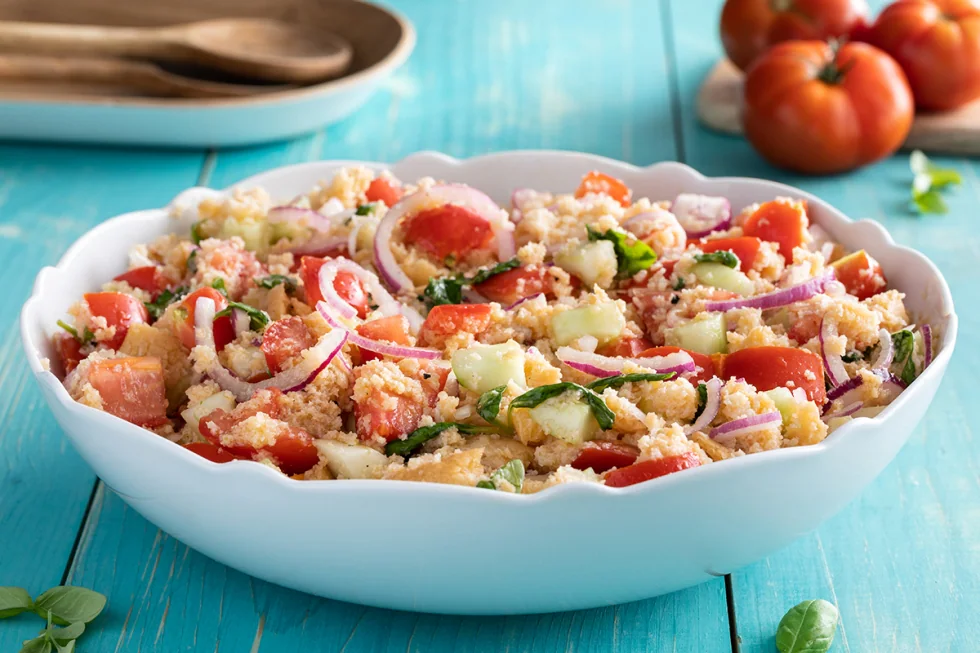
Among the most naturally adaptable dishes is panzanella, the iconic Tuscan bread salad that food guides describe in its classic form with bread, tomatoes, red onion, basil, olive oil and vinegar. It belongs to summer tables and to the same no-waste logic that shaped ribollita and pappa al pomodoro. While it is broadly Tuscan rather than exclusively Florentine, it is fully at home in Florence’s culinary vocabulary and fits perfectly into any vegetarian Florentine recipe collection.
A traditional vegan panzanella is already excellent, but it can also take subtle contemporary upgrades. You can add cucumber for freshness, capers for salinity, white peaches for sweetness or charred peppers for depth, as long as bread, tomato and olive oil remain the center. The best reinterpretations do not overload it. They simply sharpen the contrast between softness, acidity and summer perfume. It remains one of the most convincing examples of plant-based Florentine and Tuscan cuisine because it is rooted in simplicity, not in substitution.
Carabaccia, the forgotten Florentine onion soup that deserves a vegetarian revival
If there is one dish that deserves far more attention in modern Florence, it is carabaccia. Florence is described as claiming the birthplace of this historic onion-based soup, and Tuscan historical food writing also links it to Caterina de’ Medici, who is said to have brought it to France. That alone makes carabaccia one of the most fascinating dishes to revisit in a modern vegetarian or vegan Florentine kitchen.
A contemporary vegetarian version can stay close to the old spirit: slowly softened onions, good vegetable stock, toasted bread and perhaps a light cheese finish if you want richness. A vegan version works just as well with olive oil, long cooking and a finishing touch such as almond cream or toasted breadcrumbs with herbs. Because onions develop natural sweetness and complexity over time, the dish does not need meat to feel deep. In fact, a careful vegan carabaccia may be one of the clearest ways to show how old Florentine cuisine already contained the logic of modern plant-based cooking.
Gnudi, the soft Florentine favorite that translates beautifully into vegetarian cooking
No discussion of Florentine vegetarian recipes would be complete without gnudi, those delicate spinach-and-ricotta dumplings often described as the filling of ravioli without the pasta wrapper. They are part of Tuscan cooking lessons and recipe traditions, and they remain one of the gentlest, most elegant examples of central Italian comfort food.
As a vegetarian dish, gnudi hardly need any reinterpretation at all. They already sit comfortably within a meat-free menu, especially with a simple butter-and-sage style finish or a lighter olive-oil-and-herb dressing. A vegan version is more ambitious, but still possible: use a firm almond-based or tofu-based ricotta, squeeze the spinach very well, season with nutmeg and shape the dumplings gently. The result will not be identical to the classic, but it can still honor the softness and restraint that make gnudi so Florentine in spirit.
Schiacciata alla Fiorentina, a Carnival dessert ready for a lighter modern version
Florence’s sweetest iconic tradition is schiacciata alla Fiorentina, the orange-and-spice Carnival cake covered in powdered sugar and often marked with the Florentine lily. It is clearly identified as a typical Florentine sweet, and older descriptions note that it was once made with pork fat, while later lighter versions use extra-virgin olive oil instead. That evolution already tells us something important: Florentine tradition has never been completely frozen. It has always adapted.
A modern vegetarian version is straightforward, and a vegan one is entirely plausible with olive oil, plant milk and careful balancing of orange zest, orange juice and warm spices. The point is not to make it trendy; the point is to keep its light texture, citrus fragrance and Carnival identity intact. In that sense, schiacciata alla Fiorentina is one of the best examples of how a beloved dessert can move toward a more inclusive modern table without losing the Florence inside it.
Even Florence’s meat icons can inspire plant-based reinterpretations
Of course, Florence is also famous for meat-heavy street food such as lampredotto and tripe, sold from stalls and food carts across the city. These dishes are central to the Florentine story, and any honest article has to admit that some of the city’s most iconic foods are not naturally vegetarian. But even here, reinterpretation can be interesting.
A vegan “lampredotto-style” sandwich made with slow-cooked oyster mushrooms, broth-soaked bread and salsa verde would never replace the original, yet it could respectfully echo its texture and street-food energy. A tomato-braised mushroom or celery-root dish could similarly nod to tripe without pretending to be it.
That matters because vegetarian and vegan reinterpretation does not always mean staying only in the vegetable section of tradition. Sometimes it means translating the structure of an iconic dish into another ingredient language. Florence’s food culture is strong enough to support both fidelity and imagination.
Florence’s old recipes still make sense on a modern table
In the end, the most interesting thing about Florentine traditional recipes reimagined in vegetarian and vegan style is how little strain they require. Florence’s cuisine may be famous for steak and offal, but it is just as deeply shaped by bread, beans, black cabbage, onions, tomatoes, olive oil and seasonal intelligence. Ribollita, pappa al pomodoro, panzanella, carabaccia, gnudi and schiacciata alla Fiorentina all show that the city’s culinary heritage can be re-read in a greener way without becoming generic or losing character.
That is probably the real lesson of Florence: tradition survives not because it stays still, but because it keeps finding new, believable ways to live at the table.