


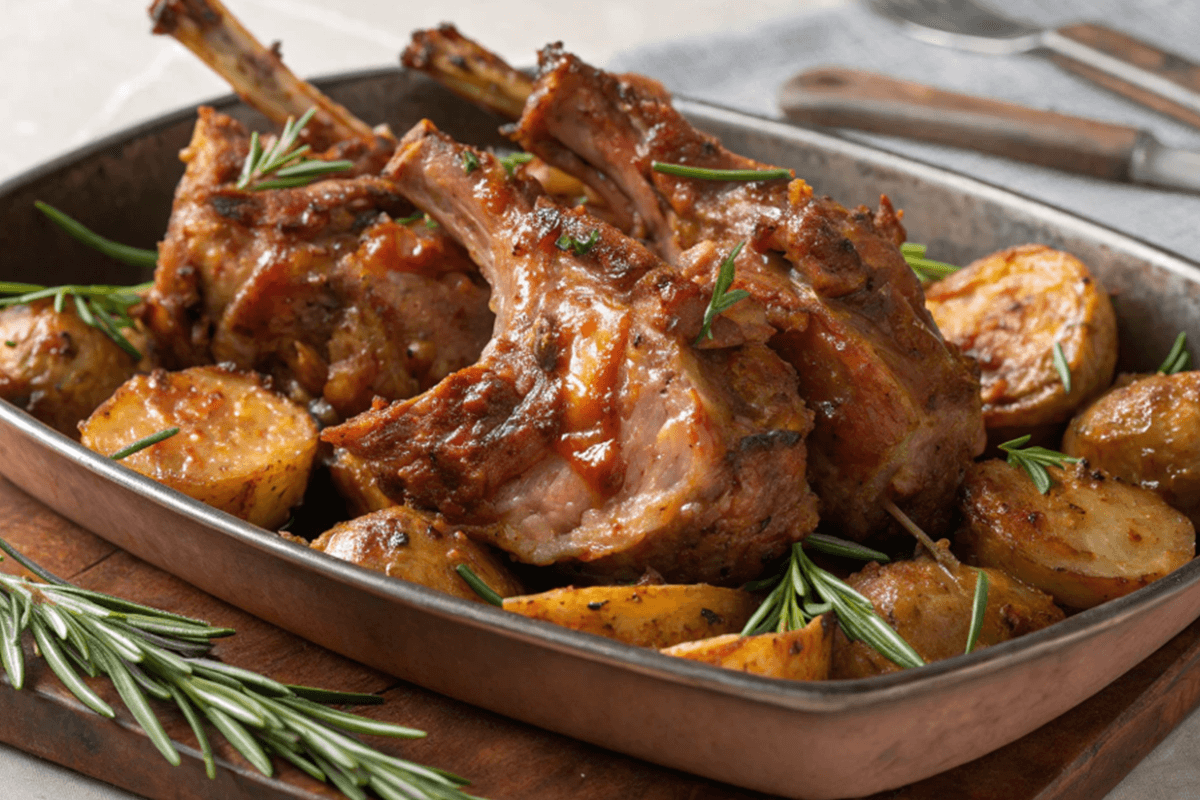
Roasted Lamb with Potatoes: Italy’s Easter Classic
In Italy, Easter tables are not only about sweet breads and chocolate eggs. For many families, especially in Central and Southern regions, the true centerpiece of Pasqua lunch is roast lamb, often paired with golden potatoes cooked in the same pan. This dish goes by many names depending on the area: agnello al forno con patate, abbacchio al forno, or simply “lamb and potatoes.” What stays constant is the idea behind it: a celebratory roast that feels both rustic and ceremonial, with aromas of rosemary, garlic, olive oil, and white wine filling the kitchen.
If you’re looking for an Italian Easter recipe that is deeply rooted in tradition, lamb and potatoes is an ideal choice. It’s also surprisingly manageable: the oven does most of the work, and the potatoes become a built, in side dish, crispy on the edges, tender inside, and saturated with the lamb’s juices.
Why Italians Eat Lamb at Easter
The tradition has multiple layers. There’s the religious symbolism of the “Paschal Lamb,” and there’s also a cultural/historical dimension: lamb was long considered a special-occasion meat, particularly in areas with strong sheep-farming heritage. Lamb’s Easter role can be linked both to ancient sacrificial symbolism and to the fact that historically it was one of the few times many families could enjoy high-quality meat.
In Rome and Lazio, the iconic Easter preparation is often abbacchio, a specific type of young, milk-fed lamb. The EU recognizes “Abbacchio Romano” as a PGI product with strict production rules; the official production specification states it is reserved for lambs born, raised and slaughtered within the defined area and compliant with the disciplinary rules.
Abbacchio vs. Agnello: What’s the Difference?
Italian terms can be confusing. “Agnello” generally refers to lamb, while abbacchio (in Roman usage) refers to a very young lamb, traditionally milk-fed. For a home cook outside Italy, you may not find “abbacchio” labeled as such, but you can still recreate the spirit of the dish using lamb shoulder pieces or leg.
The Italian culture even frames abbacchio al forno con patate as a traditional Easter recipe and presents it with classic aromatics like rosemary, garlic, white wine, and potatoes cooked together.
What It’s Really Like on an Italian Easter Table
This is not a delicate, minimalist plate. It’s a generous, family-style roast designed to be served at the center of the table, often after a first course (pasta, risotto, or broth). It’s the kind of dish that invites conversation, someone always debates how browned the potatoes should be, and someone always wants the “best” piece of lamb.
It also has a practical advantage: by roasting lamb and potatoes together, you get one coherent flavor profile and fewer moving parts in the kitchen, which is exactly what you want when you’re hosting a holiday lunch.
The Traditional Flavor Profile
Most traditional versions revolve around:
- extra-virgin olive oil
- garlic
- rosemary (sometimes bay leaf)
- white wine
- salt and pepper
Some recipes add a short soak or rinse in water and vinegar (a classic Italian trick to mellow stronger aromas in lamb).
A Classic Italian-Style Method (Simple, Reliable, Very Easter)
Below is a streamlined method inspired by mainstream Italian recipes (not a strict verbatim copy), with the key steps that make the dish work.
Ingredients (serves 4–6)
- 1.5 kg lamb pieces (shoulder or mixed cuts) or a small leg
- 1 kg potatoes
- 2–4 garlic cloves (whole or halved)
- rosemary sprigs (and optionally 1 bay leaf)
- extra-virgin olive oil
- 1 glass dry white wine
- salt and black pepper
Step-by-step
- Prep the lamb
If you like the traditional approach, briefly soak/rinse the lamb (water + a little vinegar), then dry it well. This step is commonly used in Italian home cooking. - Prep the vegetables
Cut potatoes into large chunks (too small = they can overcook before the lamb browns). Add onion wedges if you like, but potatoes are the essential partner. - Season generously
In a roasting pan, combine lamb and potatoes with olive oil, garlic, rosemary, salt and pepper. Toss well so everything is coated. - Roast hot, then finish
A classic approach is an initial high-heat roast to develop color, then finishing until the lamb is cooked through and the potatoes are deeply golden. La Cucina Italiana describes roasting lamb and potatoes together in a preheated oven at about 200°C for roughly an hour, until both are well browned. - Deglaze with white wine
Add the wine partway through cooking to lift flavors from the pan and help create a light roasting sauce. Let the alcohol evaporate before closing the oven again. - Rest and serve
Rest the lamb briefly before serving to keep it juicier. Spoon pan juices over both lamb and potatoes.
Tips
- Dry the lamb well before roasting: surface moisture delays browning.
- Don’t crowd the pan: overcrowding steams instead of roasts; use a larger pan if needed.
- Cut potatoes big: you want crunchy edges with a creamy center.
- Use fresh rosemary: dried rosemary can taste harsh in a roast.
- Watch doneness: lamb cuts vary; shoulder pieces take longer than chops.
Regional Twists
Italy doesn’t have one Easter lamb recipe, there are many. The Italian culture have multiple regional preparations (Tuscan alla cacciatora, Sardinian saffron-forward versions, and more), highlighting how deeply lamb is embedded in local food culture.
For a Roman twist, some traditional recipes add a punchy finishing sauce featuring anchovies and vinegar, still served with potatoes, turning the roast into a more intensely savory dish.
Wine Pairing: What Italians Often Choose
- Chianti Classico or other Sangiovese-based reds: bright acidity, great with roasted fat and herbs.
- Montepulciano d’Abruzzo: softer fruit, easy to drink at a long lunch.
- Vermentino (for a white option): works if the roast is lighter and herb-forward.