


Sant’Ambrogio Market Guide: What Florentines Actually Buy
Florence has no shortage of places where visitors can taste Tuscan food, but if you want to understand what Florentines actually eat and buy for their homes, there is one address that deserves particular attention: Mercato di Sant’Ambrogio.
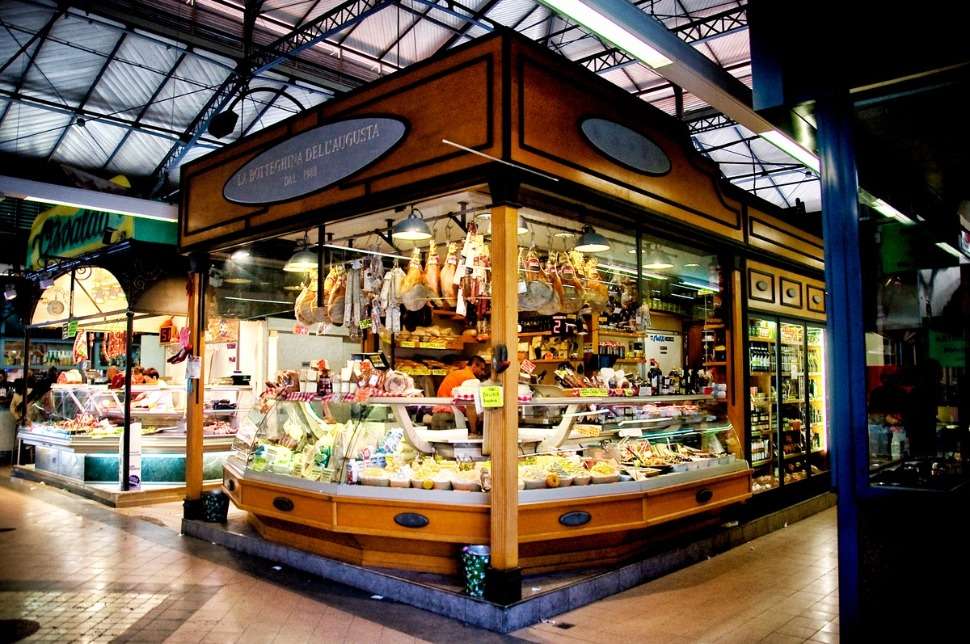
Located in Piazza Lorenzo Ghiberti, between the Sant’Ambrogio and Santa Croce areas, this historic Florence food market still functions primarily as a neighbourhood market rather than simply as a tourist attraction. Its covered pavilion contains butchers, fishmongers, cheesemongers, bakeries, delicatessens and small places to eat, while the surrounding outdoor stalls sell fruit, vegetables and other everyday goods.
Sant’Ambrogio was inaugurated in 1873, during the major transformation of Florence in the years surrounding its period as capital of the Kingdom of Italy. More than 150 years later, it remains an important part of daily city life. The market is generally open Monday to Saturday from 7:00 am to 2:00 pm, with Sunday closed.
For travellers interested in authentic Florence food, Sant’Ambrogio offers something particularly valuable: the chance to observe ingredients before they become the dishes served in restaurants.
Why Sant’Ambrogio Feels Different from Other Florence Markets
Visitors often associate Florence markets with Mercato Centrale in San Lorenzo. Sant’Ambrogio, however, has retained a stronger connection with ordinary grocery shopping.
Inside and around the market you will see customers buying ingredients for lunch and dinner: vegetables by weight, fresh meat, fish, bread, cheese, cured meats, pulses and prepared foods. The outdoor area also includes stalls selling clothing, household products, plants and flowers, making Sant’Ambrogio much closer to the traditional Italian idea of a mercato rionale, a neighbourhood market serving everyday needs.
That everyday character is precisely what makes this one of the best markets in Florence for food lovers.
Instead of arriving with a checklist of famous products, watch what local shoppers are doing. They compare vegetables, ask butchers how a particular cut should be cooked, discuss quantities and choose products according to the season.
Shopping here is part transaction, part conversation.
Seasonal Fruit and Vegetables: The Heart of Florentine Shopping
One of the first things Florentines buy at Sant’Ambrogio Market is also one of the simplest: fresh produce.
The fruit and vegetable stalls outside the covered hall change dramatically throughout the year. Tuscan cooking has always been closely connected to seasonality, and the market makes that relationship immediately visible.
Summer means colourful displays dominated by tomatoes and other Mediterranean vegetables, while the arrival of autumn brings mushrooms and more earthy flavours. Traditional shopping baskets may also include artichokes, leafy greens and cabbages depending on the season.
This is important if you want to understand Florentine cuisine. Many famous Tuscan recipes are not based on expensive or complicated ingredients. They are built around excellent vegetables, bread, beans, olive oil and careful cooking.
For visitors staying in an apartment in Florence, buying vegetables at Sant’Ambrogio and preparing a simple dinner can therefore be as revealing as eating in a restaurant.
Meat: A Serious Business in Florence
Walk into the covered market and one category becomes impossible to ignore: meat.
The official roster of Sant’Ambrogio traders includes several dedicated butcher shops, among them Luca Menoni, Falsettini Carni, Lanini Carni, Carni Magiche and Valdarno Carni.
That concentration makes sense in a city whose culinary tradition includes dishes such as bistecca alla Fiorentina, bollito, stews and numerous preparations using less fashionable cuts.
One thing worth noticing is that Florentine market shopping does not revolve exclusively around steak. Local cooking traditionally makes use of a wide range of cuts, including economical ones suitable for slow cooking.
This philosophy, using the whole animal rather than concentrating only on premium cuts, is also connected to some of Florence’s most distinctive street foods.
Lampredotto and Tripe: Florence Beyond the Bistecca
Anyone researching what to eat in Florence will eventually encounter lampredotto.
Made from the fourth stomach of the cow and traditionally simmered before being served in bread with sauce, lampredotto is one of Florence’s defining street foods. It also reflects exactly the kind of cooking represented by Sant’Ambrogio: practical, economical and deeply rooted in local habits.
At I Trippaio di Sant’Ambrogio, visitors can see this side of Florentine food culture directly.
Even if offal is outside your comfort zone, observing what is being prepared is worthwhile. Florence’s culinary identity cannot really be understood through bistecca and pasta alone. Historically, humble ingredients, leftovers, bread, beans and less prestigious cuts of meat have played an equally important role.
Pecorino, Salumi and the Ingredients of a Florentine Table
Another category worth exploring is cheese. At counters such as Formaggeria Sant’Ambrogio, shoppers can find cheeses, bread and deli products, while other gastronomia stalls offer cured meats and prepared foods. For travellers wondering what food to buy in Florence, Tuscan pecorino is an obvious place to start.
Different stages of ageing dramatically change its flavour and texture. A younger pecorino tends to be softer and milder, while longer-aged versions develop a firmer texture and more concentrated flavour.
Pair it with Tuscan cured meats and good bread and you already have the foundations of the kind of simple meal that many Italians would happily assemble at home. And then there is schiacciata, the olive-oil-rich Tuscan flatbread whose smell often makes resisting a bakery counter almost impossible.
Beans, Chickpeas and the Importance of the Civaiolo
One of the most interesting stalls for understanding traditional Tuscan cooking may also be one that inexperienced visitors overlook.
Il Civaiolo specialises in legumes, spices and other pantry products.
The civaiolo is closely connected to an older style of Italian shopping, when dried beans, chickpeas, cereals and similar products were purchased from specialist merchants.
Beans are fundamental to Tuscan cooking. They appear alongside meats, in soups and in simple preparations seasoned with olive oil.
If your image of Italian food is dominated by pizza and pasta, spending time at this type of stall offers an entirely different perspective.
Tuscan cuisine is just as much about beans, vegetables and bread.
Fresh Fish: Another Side of the Florentine Kitchen
Florence may be inland, but fish is far from absent from its markets. Pescheria Gallerini represents the seafood side of Sant’Ambrogio, while historical descriptions of authentic Florence market shopping also highlight fresh fish and pesce azzurro among the products traditionally purchased by locals.
Watching customers at the fish counter is another reminder that the food Florentines cook at home can be considerably broader than the dishes most commonly marketed to tourists.
Stop for Lunch at Da Rocco
Sant’Ambrogio is not only somewhere to shop. It is also somewhere to eat.
One of its best-known institutions is Trattoria Da Rocco, a simple market trattoria inside the covered building. Rather than trying to recreate a luxury version of Tuscan cuisine, places like this preserve the connection between the market and straightforward everyday cooking.
Stopping for lunch after browsing the stalls makes particular sense because you move naturally from ingredients to finished dishes.
It is exactly this relationship that makes a visit to Sant’Ambrogio more interesting than simply photographing a market.
How to Shop at Sant’Ambrogio Like a Local
Arrive in the morning rather than treating the market as an afternoon attraction. Sant’Ambrogio opens early and finishes around 2:00 pm, so the rhythm is very different from attractions designed around visitors.
Instead of asking immediately for “the best Tuscan product,” start with what looks good that day.
Look at what other customers are ordering. Ask what is seasonal. If you are buying cheese or cured meat, explain whether you want something mild or strong. If you have access to a kitchen, ask a butcher or vegetable seller how they would cook an unfamiliar ingredient.
These small conversations are part of the local market experience in Florence.
A useful Italian word to remember is etto. One etto equals 100 grams, so due etti means 200 grams, a very normal quantity when buying cheese or salumi.
A Historic Market That Has Recently Been Renewed
Sant’Ambrogio may be historic, but it is not frozen in time. A major redevelopment was completed in December 2025, following work on the external market coverings, utilities and historic stone paving. The project represented an investment of approximately €1.9 million.
Further improvements were completed in August 2026, when adjustable shading was installed beneath transparent sections of the roof to improve thermal comfort for both traders and customers during warmer periods. The municipality has also announced additional decorative projects for the market.
The renovations are an interesting example of how Florence is trying to preserve traditional neighbourhood spaces while adapting them to contemporary needs.
Why Sant’Ambrogio Market Is Worth Visiting
The biggest mistake you can make at Sant’Ambrogio is visiting only to search for souvenirs. This is a place to notice how Florence eats.
Look at the tomatoes, greens and mushrooms that change with the seasons. Watch people choosing fish for dinner. Notice the number of butcher counters. Taste pecorino. Buy a piece of schiacciata. Explore the legumes at Il Civaiolo. Try lampredotto or sit down for a simple lunch at Da Rocco.
The experience is less about discovering a single “must-buy” product and more about understanding the everyday ingredients behind traditional Tuscan cuisine. For travellers searching for an authentic food market in Florence, Sant’Ambrogio remains one of the most rewarding places to spend a morning.
Despite Florence’s immense popularity as an international destination, this corner of the city continues to perform the same essential function it has fulfilled for generations: feeding the neighbourhood.
And that is ultimately what Florentines actually buy at Sant’Ambrogio not souvenirs designed to represent Tuscany, but the ingredients they intend to cook when they get home.