


Is a Cooking Class in Florence Worth It? What to Expect
Florence is famous for Renaissance art, museums, architecture, artisan workshops and unforgettable views over the Arno. But for many travelers, the most meaningful way to understand the city is not only through paintings and monuments. It is through food. A cooking class in Florence can turn a visit into something more personal, practical and memorable, especially for those who want to go beyond restaurants and learn how Tuscan cuisine really works.
So, is a cooking class in Florence worth it? In most cases, yes. It is worth it if you choose the right format, the right setting and the right level of authenticity. Florence is one of the best places in Italy for a hands-on culinary experience because it combines local markets, historic neighborhoods, professional chefs, traditional recipes and easy access to the wider Tuscan food culture.
A good Florence cooking class is not just a tourist activity. It can be a way to understand fresh pasta, seasonal ingredients, extra virgin olive oil, Tuscan bread, sauces, desserts and the simple logic behind regional cooking. It is also one of the few experiences where you do not just consume Italian food: you learn how to recreate it.
Why book a cooking class in Florence?
A Florence cooking class is especially valuable because Tuscan cuisine is built on simplicity. This does not mean it is basic. It means that every ingredient matters. Bread, olive oil, tomatoes, herbs, meat, beans, vegetables, eggs, flour and cheese are used with precision. The beauty of the cuisine is not in complexity, but in balance.
Many travelers eat pappardelle, ribollita, pappa al pomodoro, crostini, tiramisù or handmade ravioli during their trip, but they do not always understand why these dishes taste so different in Tuscany. A cooking class helps explain the details: how pasta dough should feel, why Tuscan bread is traditionally unsalted, how extra virgin olive oil changes a dish, when tomatoes are at their best, how long a sauce should cook and why fresh ingredients are more important than decorative presentation.
It is also a great break from sightseeing. Florence can be intense: queues, museums, crowds, walking and full days outdoors. Spending a few hours in a kitchen gives the trip a slower rhythm. You cook, talk, taste, sit down and share a meal. For couples, families, groups of friends and solo travelers, it can become one of the most enjoyable memories of the journey.
What happens during a typical cooking class
Most cooking classes in Florence last between three and five hours, depending on the format. Shorter classes usually focus on one or two recipes, such as fresh pasta and tiramisù. Longer experiences may include a full Tuscan menu, a market visit, wine pairing or a more complete hands-on lesson.
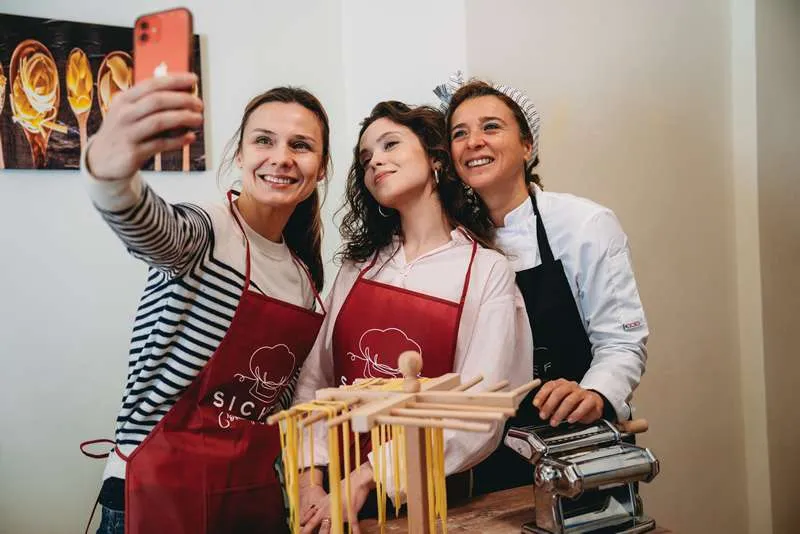
A typical class begins with a welcome from the chef or host. Guests receive aprons, meet the group and are introduced to the menu. The atmosphere is usually informal and friendly, even when the kitchen is professional. The goal is not to turn travelers into chefs in one afternoon, but to teach real techniques in a clear and enjoyable way.
The hands-on part often includes kneading dough, rolling fresh pasta, cutting tagliatelle, shaping ravioli, preparing fillings, making sauces, assembling tiramisù or cooking a traditional Tuscan dish. At the end, everyone sits down to eat what they have prepared, often with local wine, water, coffee or dessert.
The best classes also include explanations about ingredients, seasonality and local habits. This is what separates a strong culinary experience from a simple entertainment activity.
Market-to-table classes: the most authentic option
One of the best formats is the market-to-table cooking class in Florence. These experiences usually begin at a local food market, where guests walk with the chef, learn how to choose ingredients and discover what is in season. Then the group returns to the kitchen and cooks a menu based on the products selected.
The most useful markets for this kind of experience are Mercato di Sant’Ambrogio and Mercato Centrale. Sant’Ambrogio has a more local, neighborhood atmosphere, while Mercato Centrale is more famous and central, especially for first-time visitors. Both can be interesting if the class is well organized and the guide explains the ingredients properly.
A market visit helps travelers understand Tuscan cuisine before cooking it. You see fresh vegetables, pecorino, salumi, meat, fish, herbs, bread, fresh pasta and seasonal produce. You learn why some dishes belong to winter, others to summer, and why local cooks often decide what to prepare based on what looks best that morning.
For food lovers, this is probably the most complete cooking experience to book in Florence.
Fresh pasta classes: the classic choice
The most popular option is a fresh pasta cooking class in Florence. This format works well because it is practical, fun and satisfying. Making pasta by hand is physical and visual: flour on the table, eggs in the center, dough under the palms, pasta machines, rolling pins, fillings and sauces.
Typical recipes may include tagliatelle, pappardelle, ravioli, tortelli, gnocchi or fettuccine. Some classes focus on Tuscan-style pasta dishes, while others include broader Italian classics. A well-designed class should explain the difference between egg pasta, water-based dough, filled pasta and potato gnocchi, as well as which sauce works best with each shape.
Pasta classes are ideal for beginners because the result is immediate. Even travelers who rarely cook can participate and enjoy the process. They are also excellent for families, because children usually love kneading, rolling and shaping dough.
Tuscan menu classes: deeper and more regional
A Tuscan cooking class in Florence can go beyond pasta. Some of the best experiences focus on a complete regional menu, including appetizers, first course, main course, side dish and dessert. This format gives a broader view of local cuisine.
A Tuscan menu may include crostini, pappa al pomodoro, ribollita, panzanella, handmade pasta, ragù, seasonal vegetables, cantucci, tiramisù or other traditional desserts. Depending on the season, the class may highlight artichokes, asparagus, tomatoes, mushrooms, cavolo nero, beans, chestnuts or new olive oil.
This type of class is especially worth it for travelers who want to understand Florence and Tuscany as a food culture, not just learn one recipe. It is also a strong option for repeat visitors who have already done the basic pasta class and want something more rooted in the region.
Private cooking class or group class?
Both options can be excellent, but they offer different experiences. A group cooking class in Florence is social, lively and usually more affordable. It is perfect for solo travelers, couples and friends who enjoy meeting people. The atmosphere can be fun and convivial, especially when the meal is shared at the end.
A private cooking class in Florence is more flexible and personalized. It can be adapted to dietary needs, special occasions, families, honeymooners or small groups.
It may take place in a cooking school, a private kitchen, a villa or even in accommodation with a private chef. This format is better for travelers who want more attention from the chef, a specific menu or a more intimate experience.
For a romantic trip, anniversary or luxury stay, a private chef cooking class can be one of the most memorable activities in Florence.
Is it suitable for beginners?
Yes, most cooking classes in Florence are suitable for beginners. You do not need professional skills. The chef usually explains each step and helps guests during the preparation. The important thing is to choose the right class for your comfort level.
Beginners should look for hands-on pasta classes, tiramisù classes or simple Tuscan menu experiences. More experienced cooks may prefer smaller groups, technical lessons, market-to-table formats or classes focused on regional depth rather than tourist-friendly recipes.
If you have dietary requirements, such as vegetarian, vegan, gluten-free or lactose-free needs, it is important to check in advance. Some classes can adapt the menu, while others cannot, especially if fresh pasta or shared recipes are central to the experience.
How much does a cooking class in Florence cost?
Prices vary depending on duration, group size, location, chef, menu and what is included. A simple shared pasta and tiramisù class is usually more affordable, while a market tour with full menu, wine and professional kitchen costs more. Private classes, villa experiences and luxury chef-led activities are naturally at the higher end.
The key is not choosing only by price. A cheaper class may be perfectly enjoyable, but it may also involve a larger group, less personal attention or a more standardized menu. A more expensive class should offer something clearly valuable: smaller group, better ingredients, market visit, professional chef, beautiful location, wine pairing or a more authentic Tuscan menu.
What to look for before booking
To understand whether a cooking class in Florence is worth it, check a few details before booking. Look for a hands-on format, not just a demonstration. Check group size. Read the menu carefully. See whether the class includes a market visit, local ingredients, wine, printed recipes or a final meal. Make sure the language is suitable and the location is easy to reach.
It is also useful to choose based on neighborhood. Classes near Sant’Ambrogio, San Lorenzo, Santa Croce, Santo Spirito, San Frediano or the historic center are practical for travelers staying in Florence. Classes in the countryside or near Chianti may require more time, but they can offer a more scenic Tuscan atmosphere.
Final verdict: is it worth it?
A cooking class in Florence is worth it if you want a more immersive, memorable and personal experience of the city. It is not just about learning a recipe. It is about understanding how Florentines and Tuscans think about food: seasonality, simplicity, good ingredients, olive oil, bread, pasta, conviviality and respect for tradition.
It is especially worth it for travelers who enjoy hands-on activities, couples looking for a shared experience, families with children, food lovers, solo travelers who want a social moment and anyone who wants to bring home more than photos.
Florence is a city of art, but its food culture is also part of its identity. After visiting churches, museums and piazzas, entering a kitchen and making fresh pasta with your own hands can be the experience that makes the city feel real. A good cooking class gives you something rare: not only a meal in Florence, but a skill, a memory and a taste of Tuscany you can recreate long after the trip is over.